
Old town Halfet
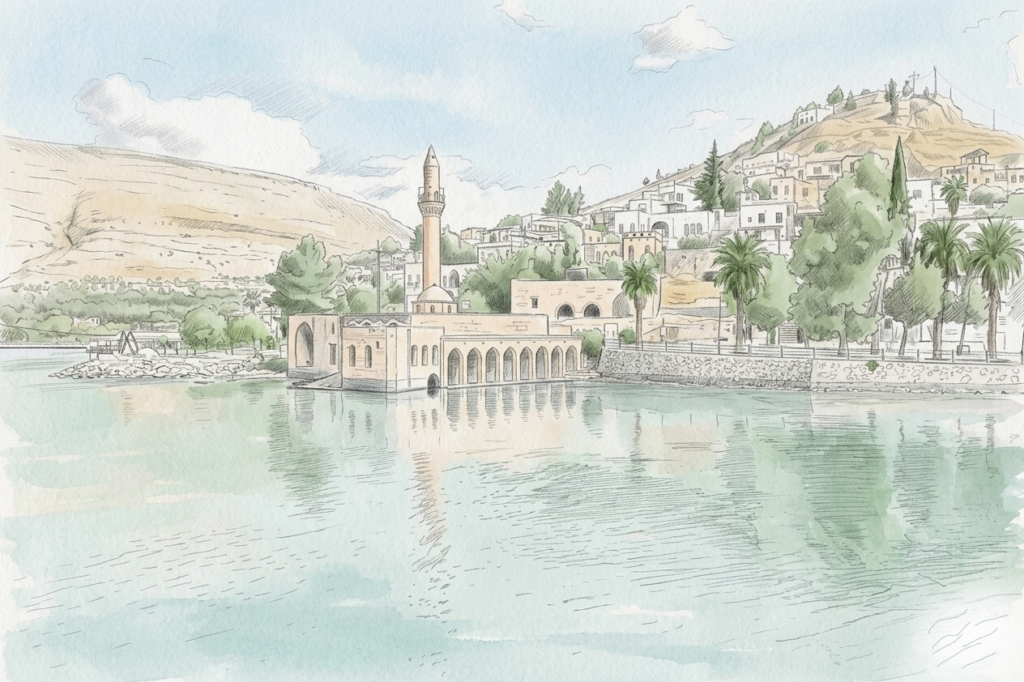
Underwater city Halfeti
Halfeti is a place of exceptional charm and deep historical roots. A local legend whispers that it’s the sole location on the planet where the rare black rose, affectionately called “Crying Arab Girl” by residents, flourishes. These unique blooms grace the landscape in both spring and autumn.
The modern Halfeti is now comprised of two distinct areas: its historic core and a newer settlement. The original town, along with its farmsteads and mosque, was inundated following the construction of the Birecik Dam on the Euphrates River in 2000. Consequently, the inhabitants relocated to a new community established approximately 15 kilometers away, now known as “New Halfeti,” while the submerged former center is referred to as “Old Halfeti.”
The origins of this settlement stretch back to 855 BC, when Assyrian King Shalmaneser II first founded it. During the Roman period, a prosperous community named “Akamai” existed, which later evolved into “Koyla,” derived from the phrase “Romaion Koula” (Roman castle).
After the Romans, a succession of empires held sway over the region, including the Sassanians, Arabs, Umayyads, and Abbasids, who governed between the 6th and 8th centuries AD. By the 11th century, the Seljuks had gained control, and in the 16th century, Halfeti became integrated into the Ottoman Empire.
In 2013, Halfeti was recognized as a Cittaslow, a designation for slow cities.
To experience Old Halfeti, one can hire a small boat from the shoreline. The sight of stone houses, trees, minarets, and ancient structures like the old castle and palace, partially submerged, is truly breathtaking. The half-submerged minaret in the village of Savaşan stands out as one of Halfeti’s most memorable images.
Around the lake, you’ll find charming eateries offering local specialties such as Halfeti kebab with eggplants or the regional Şabut grilled fish. Alternatively, you can savor Turkish tea or coffee in the tranquil tea gardens surrounding the village or at the venerable Kanneci Mansion, which is two centuries old.