
Batu Caves
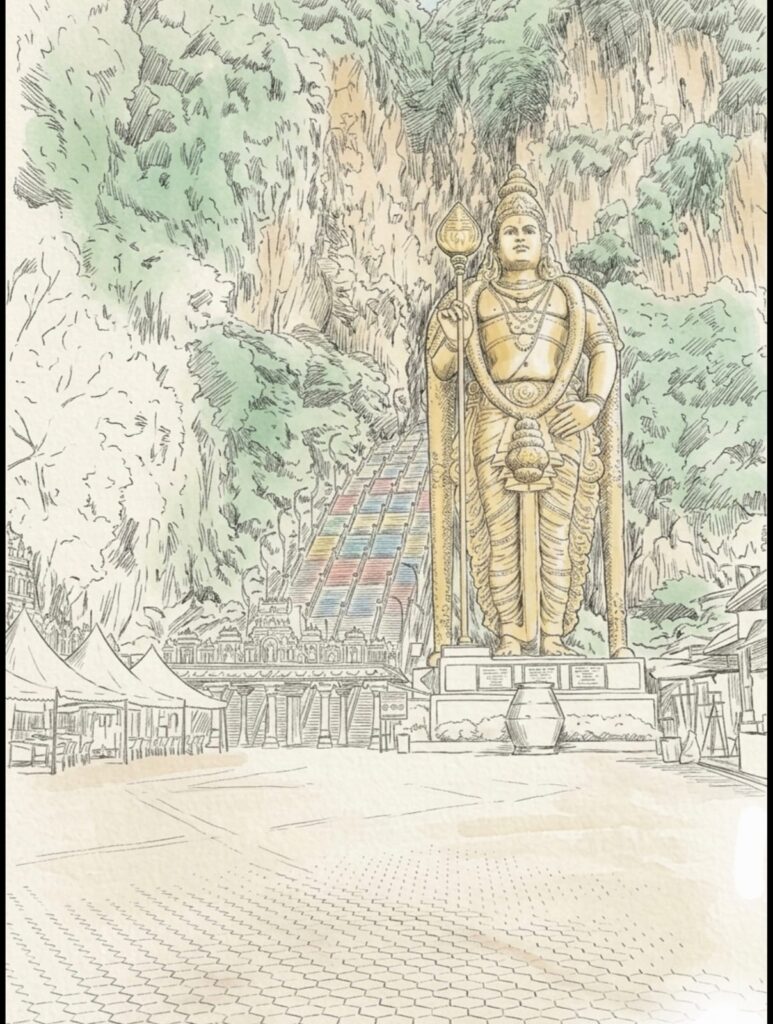
Batu Caves is a prominent Hindu temple complex and natural limestone hill formation located in Selangor, Malaysia, just north of Kuala Lumpur. Renowned for its massive golden statue of Lord Murugan and colorful stairway, it serves as both a major pilgrimage site and one of Malaysia’s most visited tourist attractions.
Key facts
- Location: Gombak, Selangor, Malaysia
- Established: Main temple consecrated in 1891
- Religious affiliation: Hinduism
- Main festival: Thaipusam
- Elevation: Approximately 100 meters above ground
Formation and natural features
Batu Caves is a limestone hill estimated to be about 400 million years old. The complex comprises a series of caves and cave temples, with Cathedral Cave (or Temple Cave) as its largest and most sacred chamber. The surrounding cliffs and karst formations host a rich variety of flora and fauna, including long-tailed macaques and endemic bat species.
Religious significance
The caves are a central site for Tamil Hindus in Malaysia and the wider diaspora. The main temple within the Cathedral Cave is dedicated to Lord Murugan. Each year, millions of devotees participate in the Thaipusam festival here, carrying kavadis (ornate offerings) up the 272 brightly painted steps leading to the temple.
Architecture and attractions
The 42.7-meter statue of Lord Murugan at the base of the hill is one of the tallest statues of the deity in the world. Other notable areas include the Dark Cave—home to unique cave fauna—and the Art Gallery Cave and Museum Cave, which display Hindu murals and statues illustrating mythology and devotion.
Tourism and conservation
Batu Caves attracts both worshippers and tourists year-round. Conservation efforts balance religious use, tourism, and environmental protection, addressing challenges like waste management, wildlife interaction, and preservation of the fragile limestone ecosystem. Recent restoration and painting projects have enhanced its visual appeal while maintaining cultural integrity.