
Fountain Square
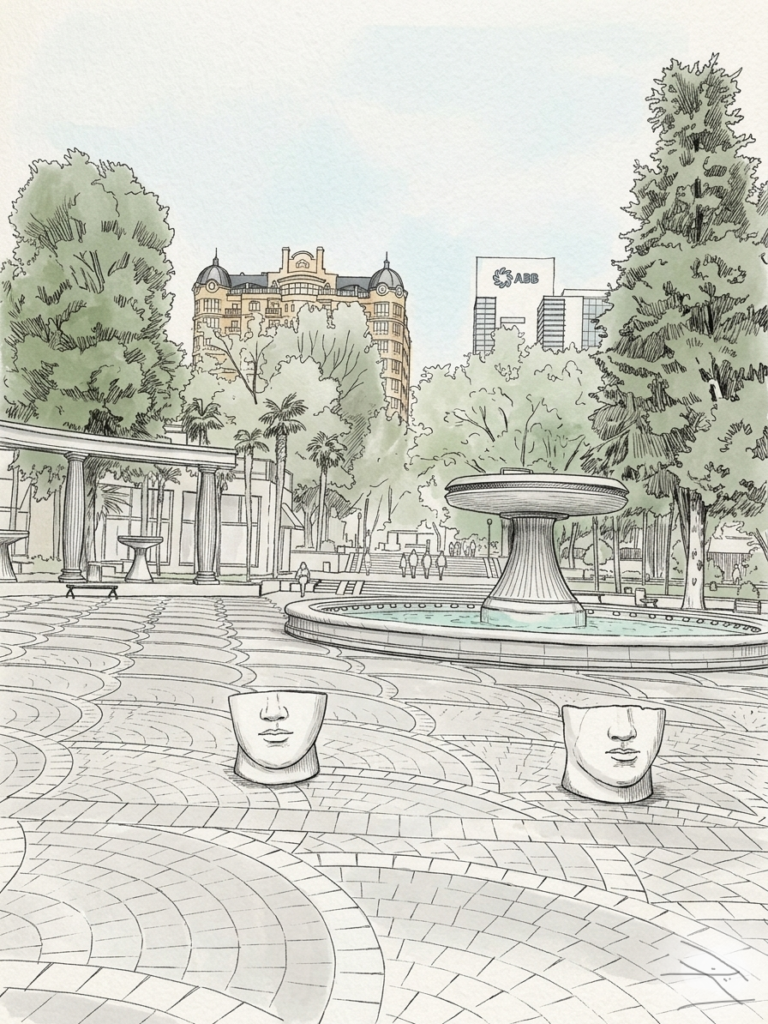
Fountain Square, Baku
Fountain Square sits at the exact center of downtown Baku, acting as the primary pedestrian hub of the capital. Known locally as the “Parapet,” this public space serves as the main transition zone between the ancient stone walls of the Old City (Icherisheher) and the modern commercial architecture of Nizami Street.
The area owes its name to dozens of unique fountains built during the Soviet era and heavily modernized in 2010. The space features mosaic walking paths, custom public art installations, mature shade trees, and rows of open-air terraces. It functions as Baku’s central meeting point, drawing constant foot traffic from morning until past midnight.
Direct Layout & Access
Fountain Square uses an open, geometric plan that blends structural stone plazas with green corridors. Understanding its entry points helps you navigate the central city without getting turned around.
- The Northern Edge: Bordered by Istiglaliyyat Street. This side connects directly to the historical stone ramparts of the Old City.
- The Eastern Spine: Flows seamlessly into Nizami Street (historically called Torgovaya), which is Baku’s main high-end pedestrian shopping avenue.
- The Southern Corridor: Leads downward toward Baku Boulevard, the massive promenade running along the edge of the Caspian Sea.
How to Get There
The square is completely closed to vehicle traffic. If you are arriving by underground transit, get off at the Sahil Metro Station (a 7-minute walk east) or the Icherisheher Metro Station (a 5-minute walk west). Most central bus lines drop riders along Istiglaliyyat Street, right at the edge of the pedestrian zone.
Key Attractions & Landmarks
While the entire perimeter is packed with retail shops and cafes, several specific structures define the square’s layout.
The Nizami Museum of Literature
Occupying a dominant position on the edge of the square, this building features a striking, illuminated blue-and-white facade. The exterior holds large arched niches containing statues of Azerbaijan’s greatest poets and writers. It serves as an excellent visual anchor if you need to meet someone in the square.
The Fountain Collections
The fountains are not identical installations; they use highly distinct design styles. You will find standard classical stone basins alongside contemporary installations. The most notable modern design features a cluster of large, polished metallic spheres that reflect the surrounding 19th-century architecture. At night, every fountain uses integrated LED lighting to illuminate the water streams.
Street Art and Bronze Sculptures
Dotted across the mosaic paving stones are life-sized bronze figures depicting everyday Baku residents from the early 20th century. Look for the bronze statue of a young woman checking her phone under an umbrella, or the sleek figure of a worker polishing windows near the shopfronts.
Dining Guide
The culinary scene at Fountain Square offers a clear split between subterranean traditional cellars and street-level European terraces.
Choose underground traditional restaurants for authentic local flavors, heavy meat dishes, and historic stone interiors.
Choose street-level terrace cafes for lighter continental meals, specialty coffee, and active people-watching.
| Restaurant | Location Type | Best For | Average Cost (Per Person) |
|---|---|---|---|
| Dolma Restaurant | Subterranean Basement | Grape leaf dolma, traditional saj platters | 15 – 25 AZN |
| Firuze | Underground Vaulted Cellar | Shah pilaf, gutabs (stuffed flatbreads) | 20 – 30 AZN |
| Café City Fountain | Street Level Terrace | Mixed European-Azeri fusion, local tea sets | 25 – 40 AZN |
| Nergiz | Semi-Basement Cozy | Traditional soups, local kebabs | 12 – 20 AZN |
Local Custom: When ordering tea anywhere near Fountain Square, it will automatically arrive in a traditional pear-shaped armudu glass. It is routinely served with lemon slices and various fruit preserves (murebbe). Locals dip sugar cubes into the tea rather than dropping them directly into the glass.
Seasonal Events
The square changes usage patterns depending on the time of year. If you visit between late December and early January, the entire central plaza transforms into the “Cold Hands, Warm Hearts” Christmas Market. The city builds rows of wooden chalets selling local handicrafts, spiced hot drinks, and street snacks, with all proceeds benefiting local charities. During the spring holiday of Novruz, the square turns into an open-air cultural arena filled with folk music, traditional characters, and bonfires.
Practical Insights for Visitors
- The Evening Rush: The square stays quiet during summer afternoons due to high heat. The local crowd arrives around 7:00 PM, when the air cools down and the fountains turn on their light displays.
- Pavement Hazards: The mosaic tiles covering the plaza are highly polished. They look beautiful but become incredibly slick when wet from rain or fountain spray. Wear shoes with good rubber grip.
- Currency Factors: While major storefronts and modern cafes accept international credit cards, street vendors, small antique shops in the passages, and traditional tea stalls operate entirely on Azerbaijani Manat (AZN) cash. Keep small bills on hand.
Frequently Asked Questions
Is Fountain Square safe at night?
Yes, the square is one of the safest areas in Baku. It features high pedestrian density, constant police patrols, and bright lighting until well past midnight. Families with young children walk the area late into the evening.
Can you drive or park near Fountain Square?
No, the entire zone is strictly pedestrian. Cars are blocked by physical bollards. The nearest paid underground parking garages are located beneath Winter Park or near the landmarks along Baku Boulevard, both a short walk away.
How much time should I spend here?
If you are simply passing through to see the architecture and fountains, 45 minutes is sufficient. However, if you plan to visit the literature museum, sit for traditional tea, and explore the branching paths of Nizami Street, allocate a full afternoon or evening.