Gobustan Rock Art Cultural Landscape
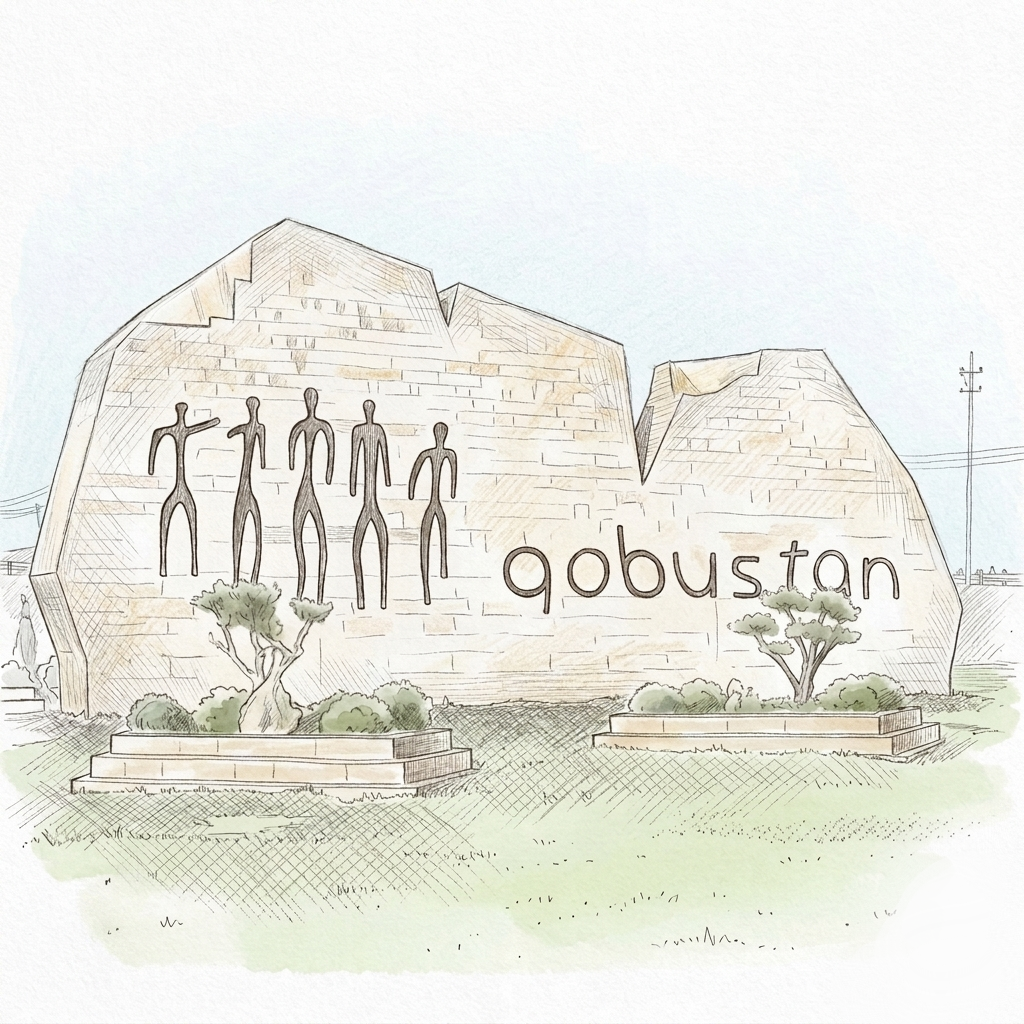
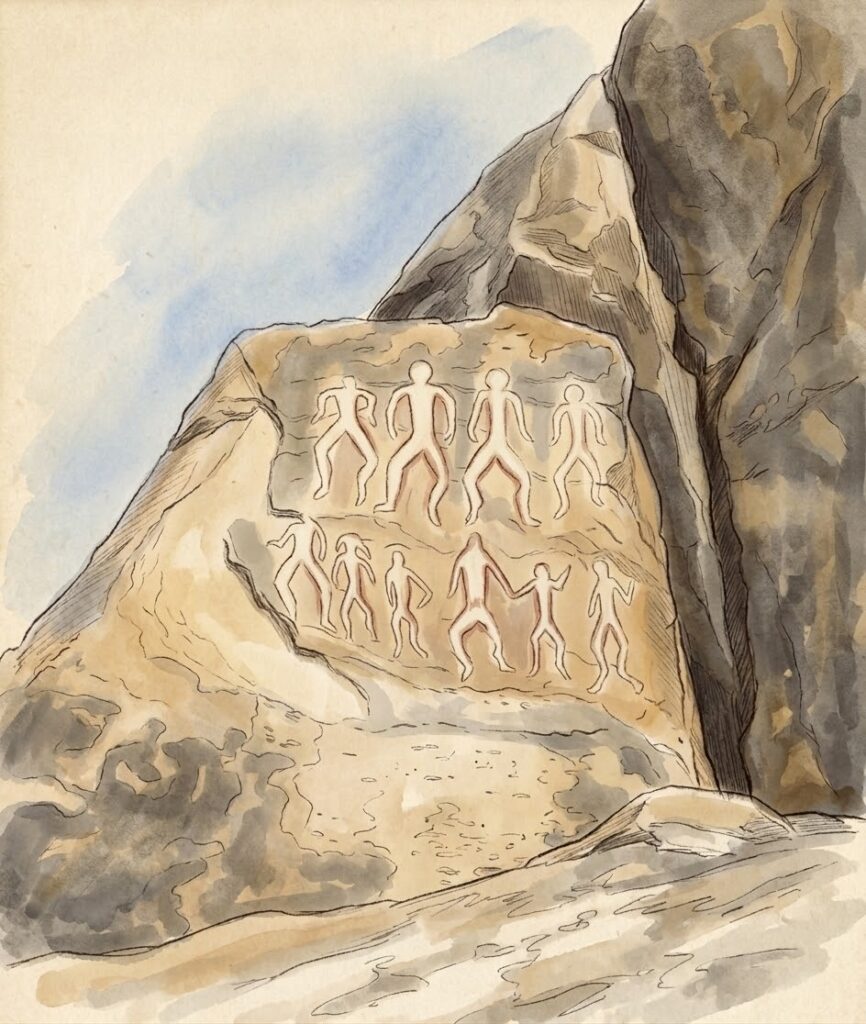
The Gobustan Rock Art Cultural Landscape is a prehistoric site in Azerbaijan containing over 6,000 stone carvings. These rock engravings preserve 40,000 years of human history, spanning from the Upper Paleolithic era to the Middle Ages.
Located 60 kilometers southwest of Baku, the protected area sits among three rocky plateaus rising from a semi-desert. It serves as an archaeological archive showing the transition of early humans from ice age hunters to settled communities.
Chronological Evolution of Gobustan Art
The carvings are not from a single era. They show how human expression changed over thousands of years. Early artists carved deep, realistic lines. Later artists used simple, symbolic shapes.
- Upper Paleolithic to Mesolithic: Carvings show large human figures, pregnant women, and wild aurochs. The figures look lifelike and show details of the body.
- Neolithic to Bronze Age: Images shift toward group hunting scenes, archers, and long reed boats. The style becomes smaller and more schematic.
- Iron Age to Middle Ages: Carvings feature horse riders, camel caravans, and warriors. This period includes a 1st-century Latin inscription left by the Roman Twelfth Legion.
Key Archaeological Discoveries
The site contains unique artifacts that show the social and cultural life of its early inhabitants.
The Gavaldash Musical Stone
Near the entrance sits a natural musical instrument. The Gavaldash is a large, flat limestone rock resting on smaller stone supports. When struck with a small pebble, it creates a resonant, metallic ring resembling a tambourine. Prehistoric tribes used this resonance to accompany ritual dances and ceremonies.
Reed Boat Carvings
The rock walls feature multiple carvings of long, multi-seat boats with oarsmen. These images suggest early maritime travel on the Caspian Sea. The designs match prehistoric boat carvings found in Scandinavia, a connection that drew international researchers to the site to study early human migration.
Visitor Details and Logistics
The climate is arid and features extreme summer heat. Visitors walk on a paved loop trail through the boulders.
| Feature | Details | Travel Advice |
|---|---|---|
| Rock Art Center | 45-minute outdoor walking loop | Visit before 10:00 AM to avoid harsh sun |
| Interactive Museum | Indoor exhibit with 100,000 artifacts | Included in the standard entry ticket |
| Mud Volcanoes | Natural bubbling mud cones nearby | Requires a 4×4 vehicle or taxi ride |
Traveler Note: The rocks absorb heat during summer. Bring water and sun protection, as the trail offers minimal shade.
Frequently Asked Questions
How old are the oldest carvings in Gobustan?
The earliest carvings date back nearly 40,000 years to the Upper Paleolithic era, while the youngest date to the Middle Ages.
Why is Gobustan a UNESCO World Heritage Site?
UNESCO inscribed the site in 2007 because the density and quality of its rock art provide an exceptional testimony to prehistoric hunting, fishing, and cultural life in Eurasia.
Can you visit the mud volcanoes and petroglyphs together?
Yes, the mud volcanoes sit just a short drive from the main rock art reserve, and most visitors combine them into a single day trip from Baku.