Mud Volcanoes
Mud Volcanoes of Qobustan
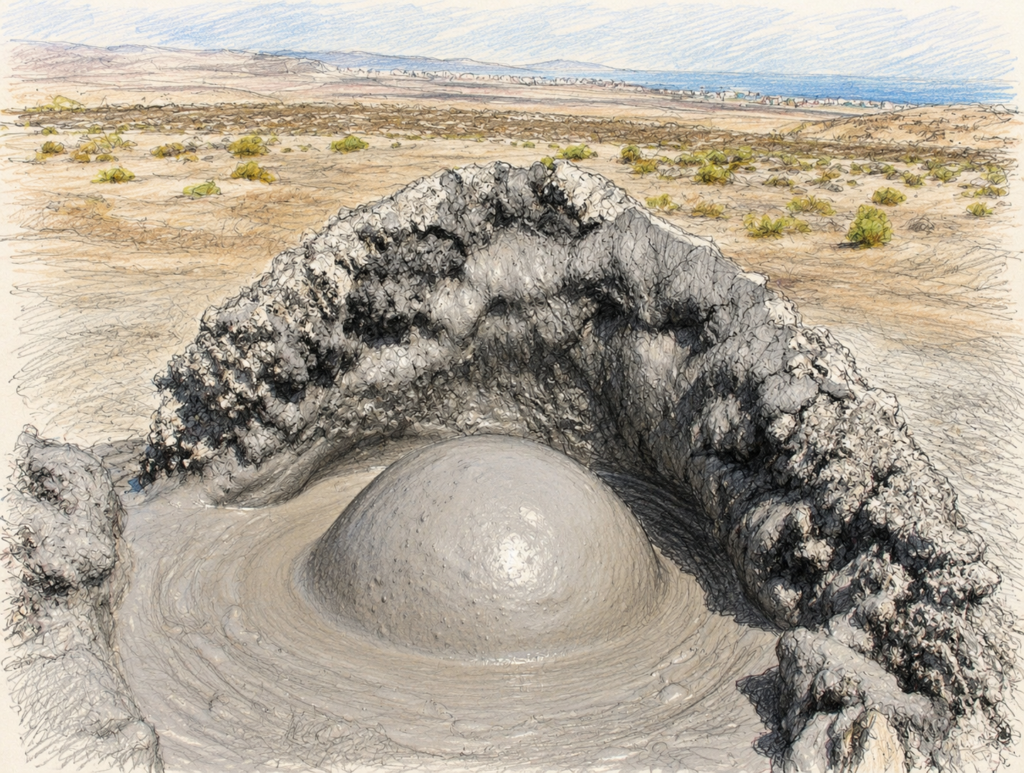
The Mud Volcanoes of Qobustan are one of Azerbaijan’s most unusual natural attractions. Located about 60 kilometers southwest of Baku, they form the largest group of mud volcanoes in the country. Their barren landscape and bubbling craters create a scene that often resembles the surface of the Moon.
Unlike ordinary volcanoes, mud volcanoes do not erupt lava. They release mud, water, and natural gases from deep underground. Most eruptions are gentle, with thick grey mud slowly flowing from small cones. Some volcanoes produce sounds and flames when methane gas ignites, although such events are rare.
Azerbaijan has nearly half of the world’s mud volcanoes. More than 300 are scattered across the country, and many of the most accessible examples lie in Qobustan. This concentration makes the area important for geological research. Scientists study these formations to understand underground pressure and oil-bearing layers.
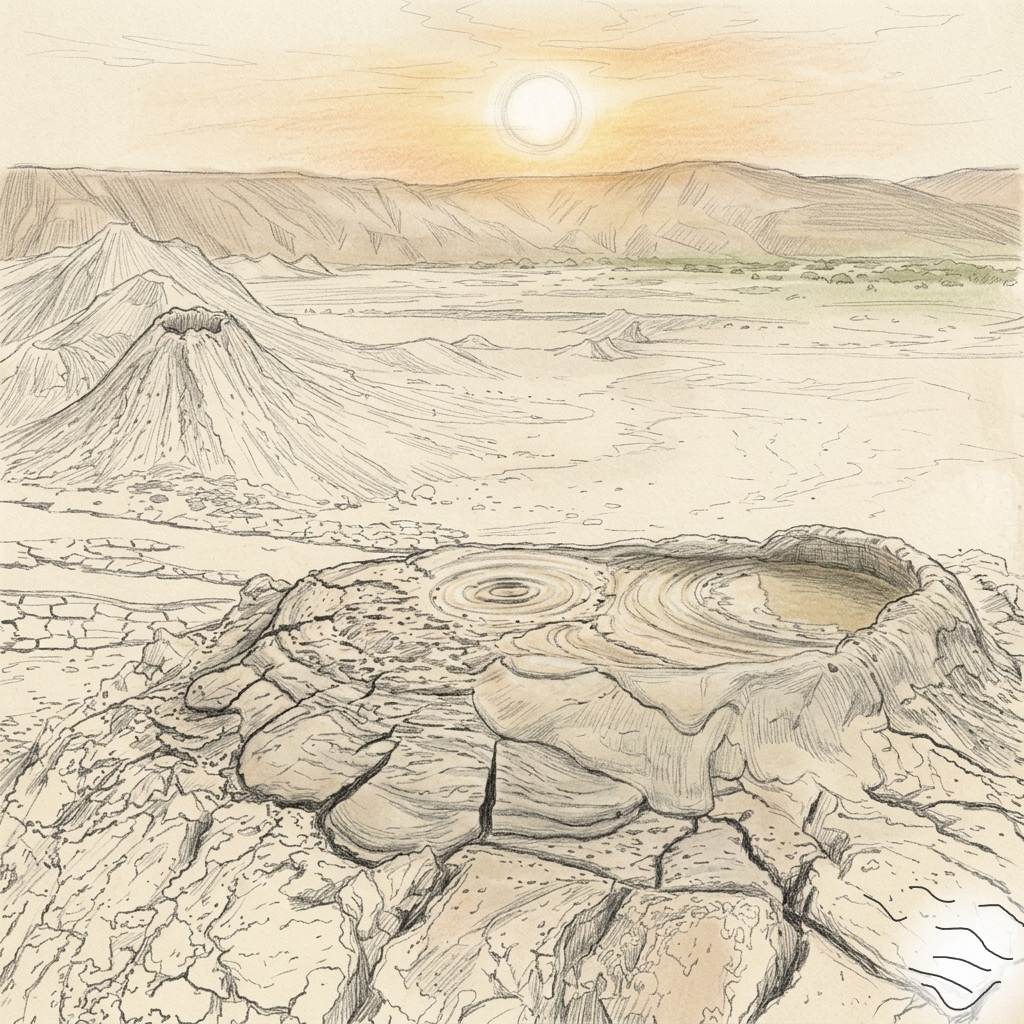
The landscape changes over time because mud volcanoes remain active. New cones can appear, while older ones may collapse or dry out. After rainfall, the ground becomes slippery, which is why sturdy shoes are recommended. Spring and autumn offer the most comfortable weather for visiting.
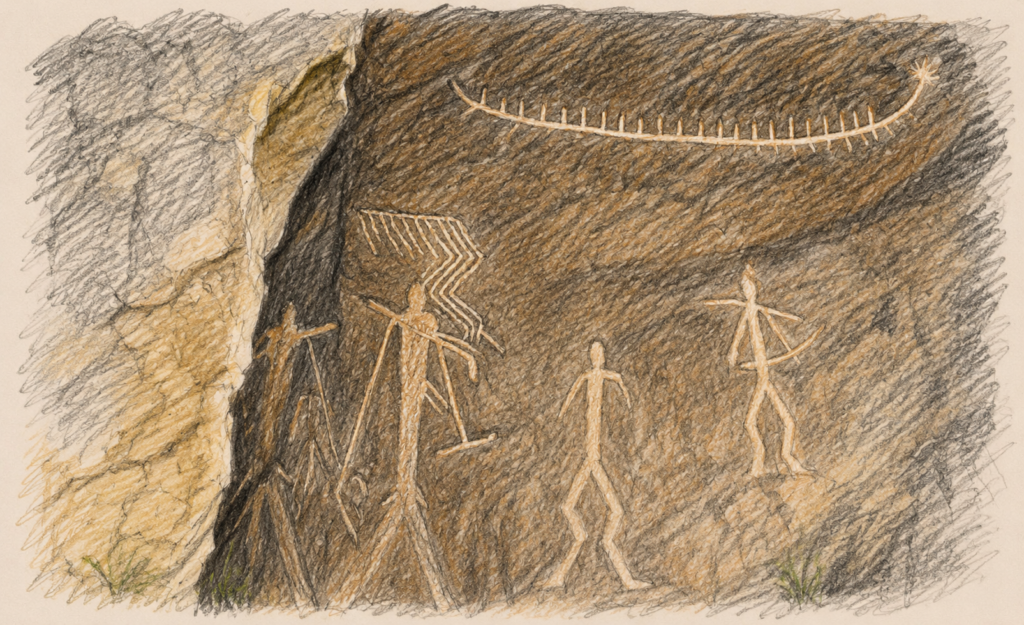
Many travelers combine the mud volcanoes with the nearby Gobustan Rock Art Cultural Landscape. This UNESCO World Heritage Site contains thousands of ancient petroglyphs carved by prehistoric people. Visiting both places offers a chance to experience Azerbaijan’s natural and cultural heritage in a single day.
Photographers are drawn to the area because of its dramatic scenery. The cracked earth, bubbling pools, and isolated hills create striking images, especially during sunrise and sunset. The absence of tall buildings adds to the feeling of being in another world.
Local guides often share stories about the healing properties of volcanic mud. While some people believe the mineral-rich mud benefits the skin, scientific evidence remains limited. Visitors should avoid entering active craters and follow safety advice from guides.
The Mud Volcanoes of Qobustan show how powerful forces beneath the Earth continue to shape the landscape. Their rare appearance and scientific importance make them one of the most memorable places to visit near Baku.
Why Are the Mud Volcanoes of Qobustan Famous?
The Mud Volcanoes of Qobustan are famous because Azerbaijan contains nearly half of the world’s mud volcanoes. Their bubbling craters, unusual terrain, and connection to underground gas reserves make them unique. Their proximity to Gobustan’s ancient rock carvings also adds to their appeal.
Best Time to Visit
Spring and autumn provide pleasant temperatures and clearer skies. Summer days can be very hot, while winter roads may become muddy after rain. Early morning and late afternoon offer the best light for photography.
Interesting Facts
- Azerbaijan has more than 300 mud volcanoes.
- Most eruptions release cold mud instead of lava.
- Some mud volcanoes can reach several hundred meters in height.
- Researchers have compared the area to landscapes found on Mars.
- The region is one of the most important mud volcano fields in the world.
FAQ
How far are the Mud Volcanoes of Qobustan from Baku?
They are located about 60–70 kilometers southwest of Baku. The journey usually takes around one hour by car.
Can visitors walk near the craters?
Yes. Visitors can approach many craters, but they should avoid stepping into active vents and unstable ground.
Are the mud volcanoes still active?
Yes. Many volcanoes in Qobustan remain active and continue to release mud and gas.
Can the Mud Volcanoes of Qobustan be visited with Gobustan National Park?
Yes. Many tours combine the mud volcanoes with Gobustan National Park and its famous prehistoric rock carvings.