
Central Market
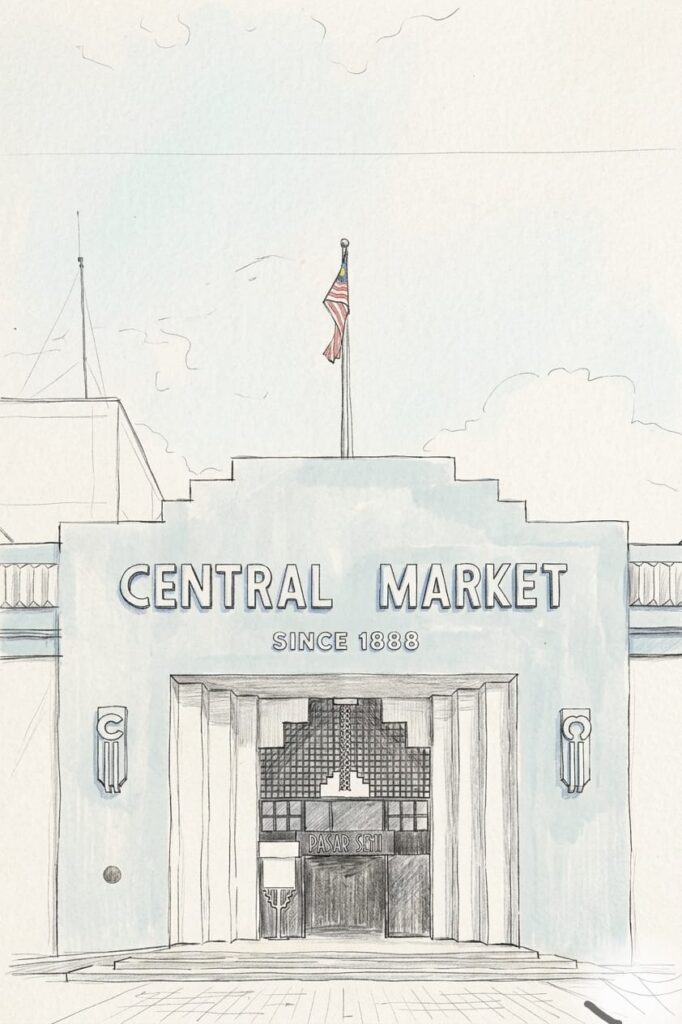
Central Market (Pasar Seni) in Kuala Lumpur, Malaysia, is a historic covered market and cultural landmark near the Klang River and Chinatown. Originally a wet market built in 1888, it is now a popular destination for Malaysian handicrafts, souvenirs, and cultural performances, drawing both tourists and locals.
Key facts
- Location: Jalan Hang Kasturi, near Pasar Seni LRT/MRT, Kuala Lumpur
- Founded: 1888 as a wet market; renovated into a cultural market in the 1980s
- Architecture: Art Deco façade with indoor, air-conditioned bazaar-style layout
- Specialty: Malaysian handicrafts, batik, souvenirs, art, and local snacks
- Nearby: Chinatown (Petaling Street), Masjid Jamek, Merdeka Square
History & architecture
Central Market began as Kuala Lumpur’s main wet market under British colonial rule. As the city modernized, the building was preserved and repurposed, rather than demolished, as a heritage and cultural center. Its pale blue Art Deco façade and clock tower reflect 1930s design trends, while the interior has been reconfigured into lanes and zones representing Malaysia’s diverse cultures.
What to find inside
The market is organized into sections such as “Malay Street,” “Straits Chinese,” and “Little India,” with stalls selling batik textiles, wood carvings, pewter, traditional clothing, paintings, and small artworks. There are also art studios, massage and henna booths, and a food court plus small cafés serving Malaysian and regional dishes, making it a convenient one-stop spot for gifts and light meals.
Cultural role & activities
Central Market functions as a cultural hub as well as a shopping venue. On the outdoor stage and surrounding square, visitors often find traditional dance shows, music performances, and seasonal festivals, especially on weekends and holidays. Its central location and heritage status make it a common inclusion on walking tours of Kuala Lumpur’s historic core, alongside nearby colonial and religious landmarks.