
Kemer, Patara Beach
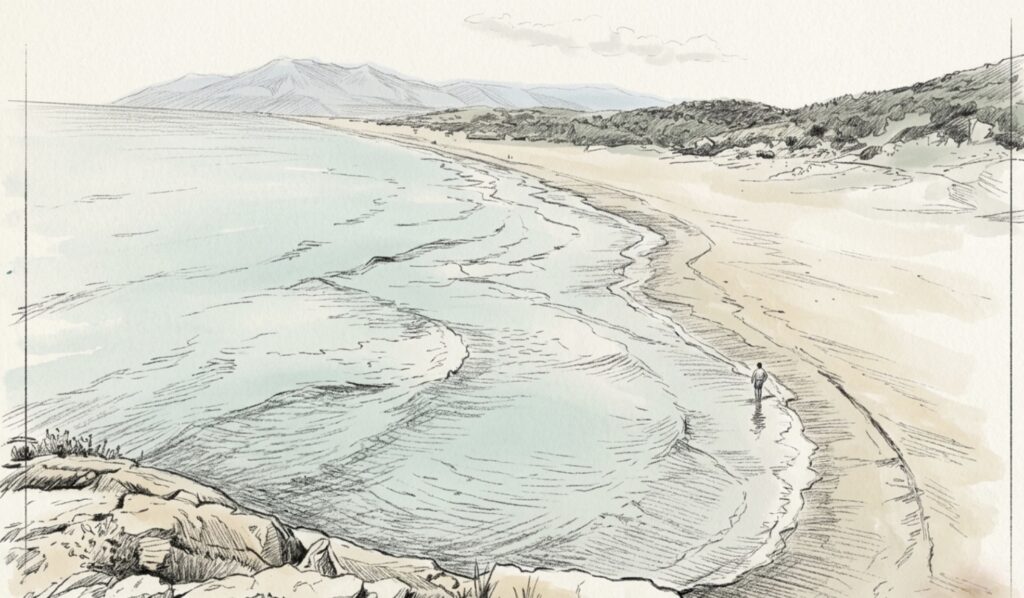
Antalya boasts one of its most appealing locales in Patara, a place distinguished by its ancient ruins and an extraordinary 18-kilometer beach. Nestled within the present-day Gelemiş Village, it’s found between Fethiye and Kalkan, roughly 42 kilometers from the Kaş district of Antalya. In antiquity, Patara served as a vital Lycian port, located to the east of the Xanthos River (or Eşen River), southwest of the Teke peninsula, and west of the region historically known as Lycia. Patara captivates with its inherent natural splendor, complemented by its profound archaeological worth. The ancient city, a marvel of eye-catching architectural design, sprawls across a considerable area east of its former harbor. Famously recognized as the birthplace of the deity Apollo, Patara’s existence was first documented by the esteemed historian Herodotus. Archaeological findings have unearthed references to the city as Patar in 13th-century BCE Hittite inscriptions. Its enduring historical importance is underscored by its role as the exclusive sea gateway for the Xanthos Valley.
At the city’s entry, you’ll encounter Lycian-style tomb structures dating back to the Roman era. The architecturally striking Triumphal Arch (Zafer Takı), featuring three archways, serves as a grand welcome. The Hurmalık Bath (Hurmalık Hamamı) and the remnants of the triple-nave Basilica situated at the port are sites well worth exploring. A notable artifact in Patara is the Stadiasmus Patarensis, an ancient Roman milestone. Archaeologists highlight its significance as the world’s oldest and most comprehensive road marker, also detailing distances between Lycian settlements. Inscriptions reveal that the theatre, positioned at the city’s furthest southern point and resting against Kurşunlu Hill (Kurşunlu Tepe), was reconstructed in 147 BCE following an earthquake. Kurşunlu Hill, the theatre’s location, offers the most stunning panoramic vistas of the city. The construction date is cited as 69-70, and it exhibits characteristics of the Vespasian Bath (Vespasian Hamamı). Continuing along the path adjacent to the bath leads you to Patara’s main thoroughfare, paved with marble. The granary (Granarium), located northwest of the hill, stands as one of Patara’s prominent monumental structures today. It was erected in the 2nd century BCE by Emperor Hadrian and his consort Sabina. North of the theatre lies the Parliament Building (Parlamento Binası), the venue for meetings when Patara served as the capital of the Lycian League. The Byzantine Castle, a significant edifice of its time, commands attention with its expansive walls situated beyond the street. The Corinthian Temple (Korint Tapınağı) to the east of the Castle and the Byzantine Church (Bizans Kilisesi) at its western edge are further points of interest on your exploration of the ancient city. Water was channeled to the city from the cliffs on Kızıltepe’s slope, near İslamlar Village, approximately 20 kilometers to the northeast. The most imposing segment of the aqueduct connecting the water source to the city, known as the “Delik Kemer,” is found to the north at Fırnaz port. The magnificent Patara Theatre (Patara Tiyatrosu), concealed by sand for many years, was excavated during archaeological efforts and subsequently opened to the public. It boasts a seating capacity of around 10,000 and was originally constructed in the 2nd century BCE.
Throughout its three-century existence within the Roman Empire, Patara held considerable importance for both Lycia and Anatolia, maintaining its urban fabric seamlessly into the Eastern Roman (Byzantine) era. It endured the ravages of time and was universally admired by its visitors. Furthermore, Patara is recognized as the birthplace of Saint Nicholas, globally known as Santa Claus. To this day, Patara and the Lycian League, through their deep connection with nature, the cultural and economic prosperity of their inhabitants, and their democratic governance and principles, continue to serve as a source of inspiration and motivation for people and nations in forging a brighter future.