
Rome
3-day walking route
Day 1: Ancient Rome and the Origins of the Empire
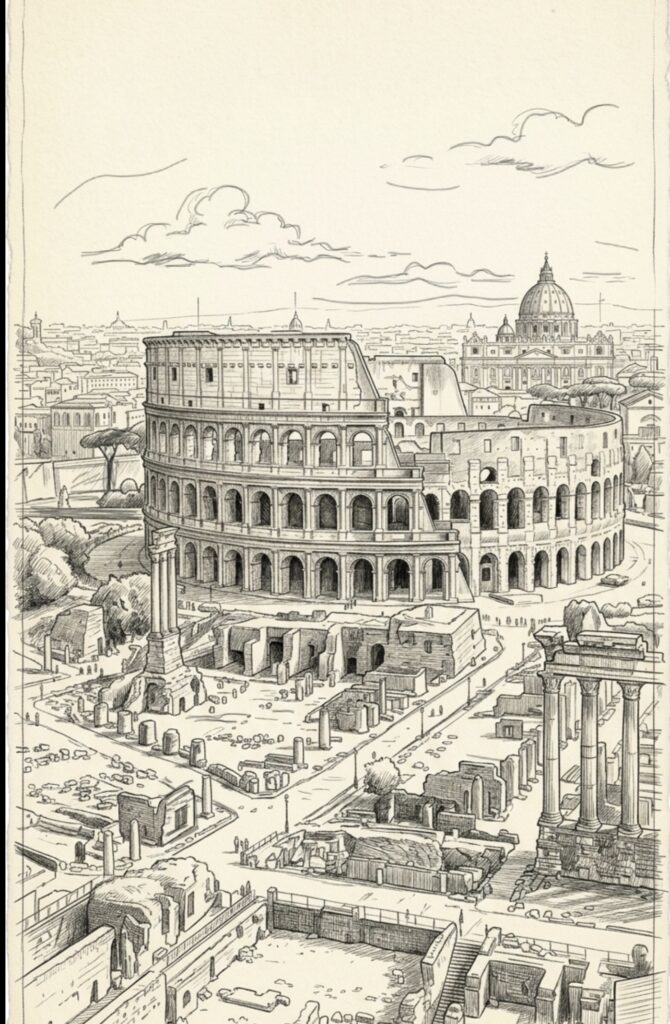
This day is entirely dedicated to antiquity. Start your morning as early as possible (preferably around 8:30–9:00 a.m.) to avoid lines.
Morning: Colosseum Rome’s main symbol. Be sure to buy tickets online in advance on the Colosseum’s Official Website (get a combined ticket: Colosseum + Roman Forum + Palatine Hill) are valid for 24-48 hours.
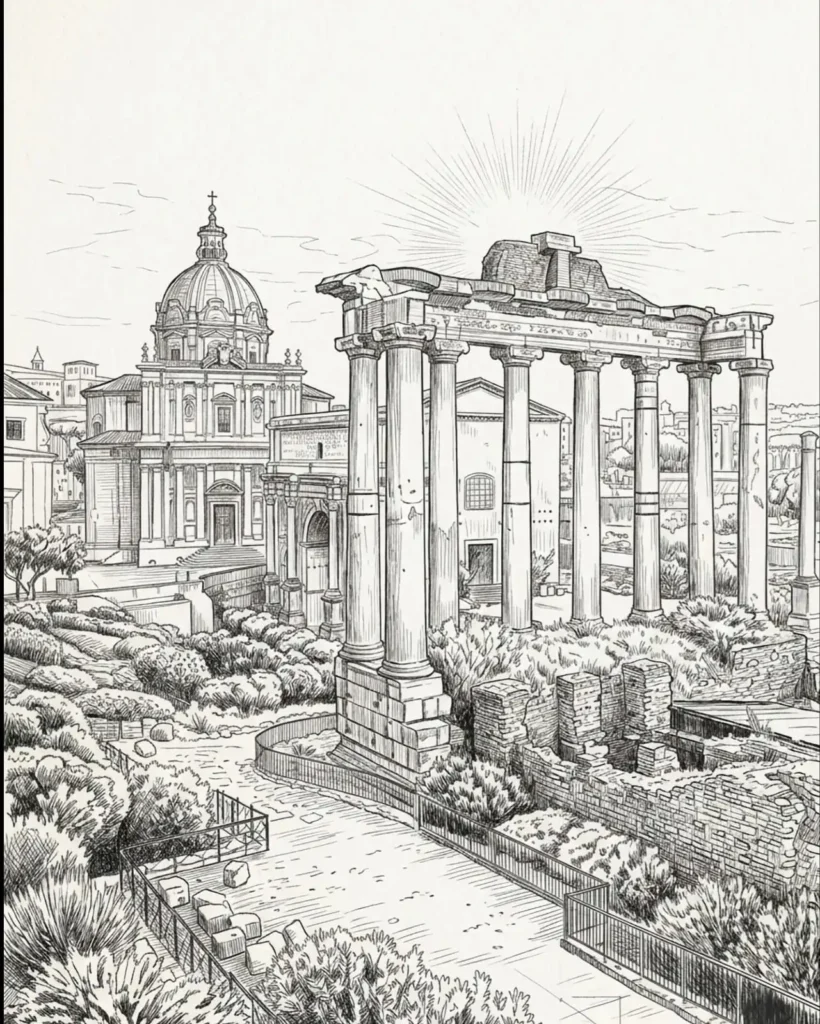
Palatine Hill (the cradle of Rome) and the Roman Forum (the center of ancient life) are located directly across from the Colosseum. Stroll among the temple ruins and climb the Palatine Hill for the best view of the Forum and are located just 40 meters apart. Their exploration takes about 2-3 hours.
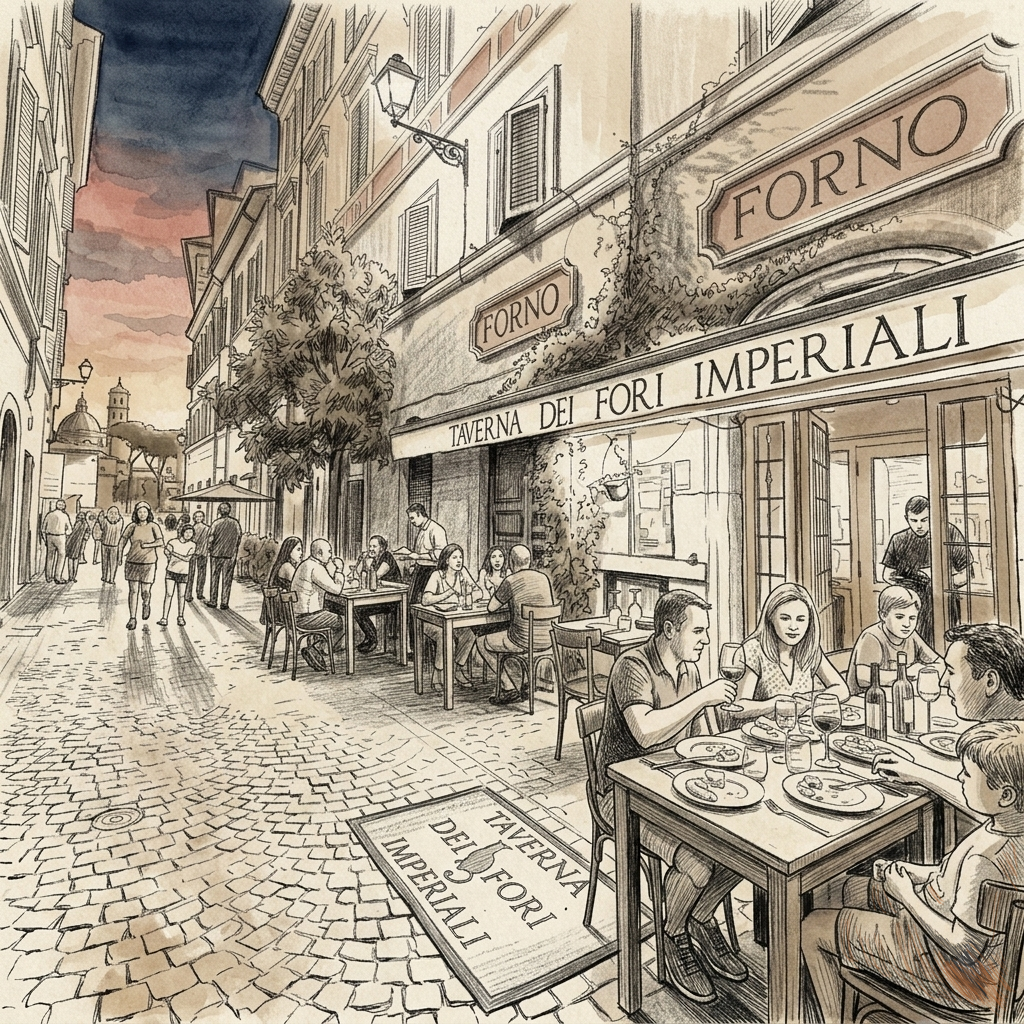
Lunch: Head down to the Monti district (a 10-minute walk from the Colosseum). This is an authentic neighborhood with excellent trattorias where you can try classic pasta, pizzas, wine, coffee, gelato, sweets, also you can try Indian, Japanese food. There you can find new salad place Green & Go, where you can design your own salad. In Monti you can find supermarkets and food shops.
Evening: Piazza Venezia and the Vittoriano, a monument dedicated to King Vittorio Emanuele II and the Unification of Italy. A grand, snow-white monument, which Romans jokingly call the “typewriter.” An elevator takes you to the Terrace of the Quadrige observation deck, from where you can see all of Rome at sunset.
Day 2: The Vatican and colorful Trastevere
Important: Knees and shoulders must be covered when visiting the Vatican cathedrals and museums.
Morning: Vatican Museums, Sistine Chapel and St. Peter’s Basilica
Tickets here are best booked weeks in advance on the official website. The masterpieces of Michelangelo and Raphael are worth every euro.
Midday: St. Peter’s Basilica
Admission to the basilica itself is free, but you’ll have to wait in line for security. Don’t miss the chance to climb the dome of the basilica—the view of the key-shaped square is stunning. Walk along the picturesque Via della Conciliazione to the castle Sant’Angelo and the bridge of the same name, featuring Bernini’s angel statues.
Evening: Trastevere
Stroll along the Tiber River to the city’s most colorful, vibrant, and Italian neighborhood. In the evening, the lights come on, hundreds of bars open, and the aroma of wood-fired pizza fills the air. It’s the perfect spot for dinner and a glass of wine. In the evening take an evening stroll through the Trastevere district it is a captivating quarter nestled on the far side of the Tiber, south of the Vatican, boasts a picturesque setting. The very name, “Trastevere,” echoes its Latin roots, “trans Tiberium,” signifying its position “beyond the Tiber.” This historic, once blue-collar district, with its labyrinthine alleys and timeworn houses, transforms into a bustling hub at night. The presence of many tourists contributes to its lively ambiance, evident in the abundance of restaurants, trattorias, and pizzerias. For an authentic Roman immersion, explore this genuine Italian neighborhood on foot or find a moment of repose on a cafe terrace.
Day 3
Piazza di Spagna, Trevi Fountain, Pantheon, Piazza Navona.
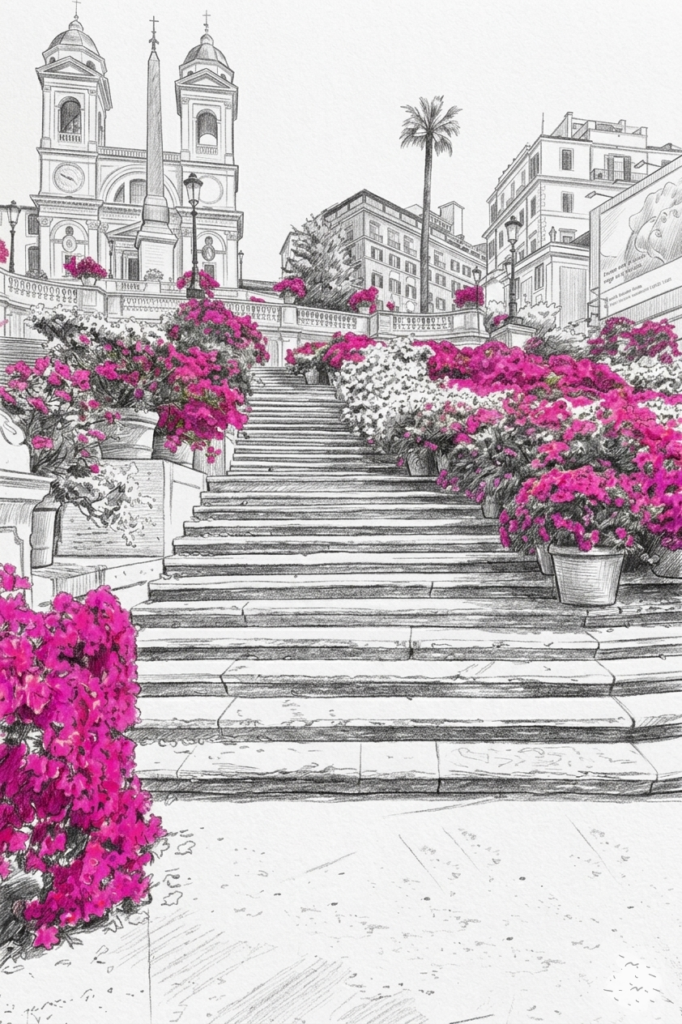
Morning: Piazza di Spagna
Get here early, while the famous Spanish Steps are free of hundreds of tourists. Nearby, stop for an espresso at the historic Antico Caffè Greco.
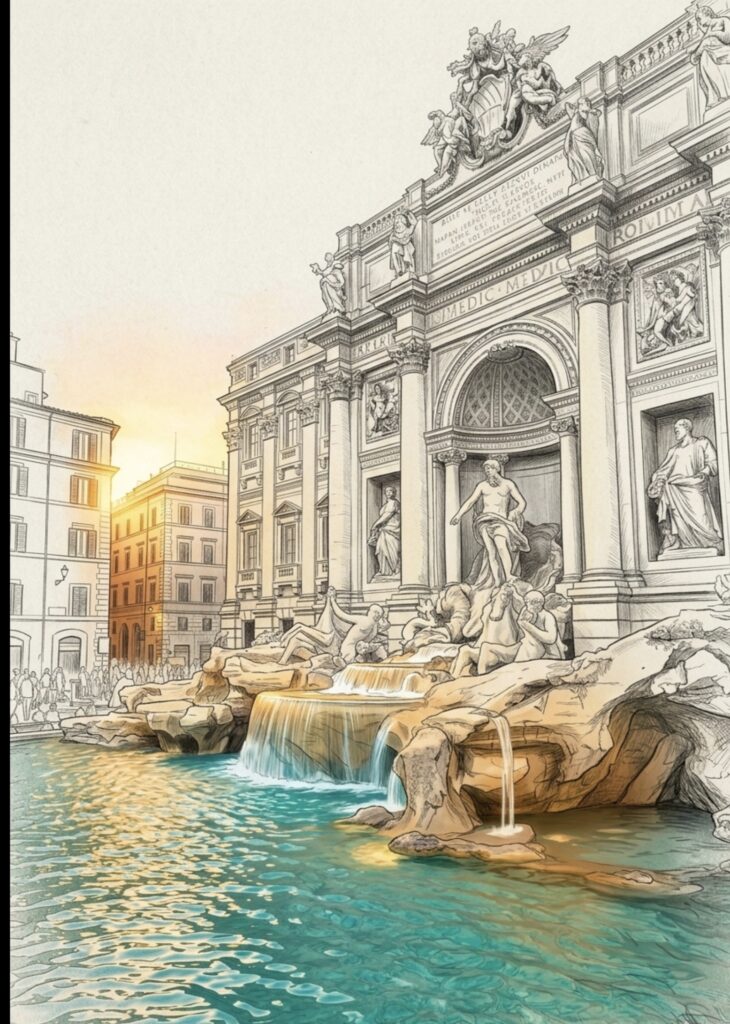
Midday: Trevi Fountain (Fontana di Trevi)
Rome’s largest and most beautiful fountain. Don’t forget to toss a coin over your left shoulder with your right hand to ensure you return.
Pantheon and Piazza Navona
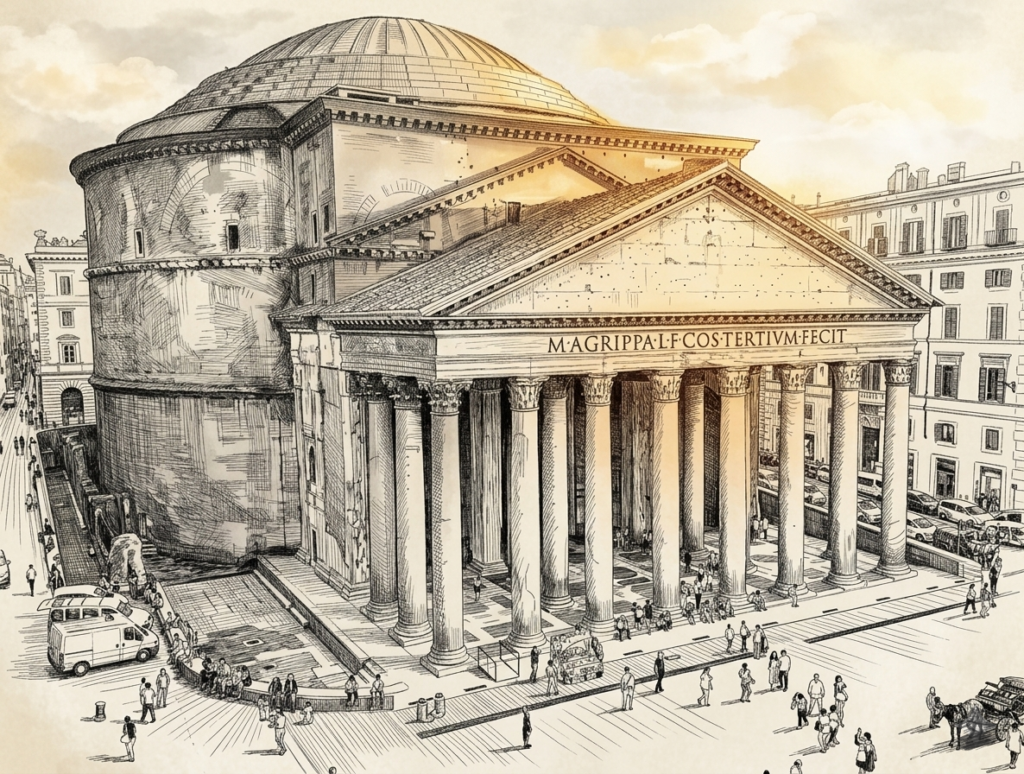
The Pantheon is a unique ancient temple with a huge dome and a central opening. Afterwards, head to Piazza Navona to admire the Fountain of the Four Rivers.
Villa Borghese and the Pincio Viewpoint (Terrazza del Pincio)
End your journey in the tranquil, green park of Villa Borghese. Reach the Pincio Viewpoint at sunset, where you can admire the views of Piazza del Popolo and the golden rooftops of Rome.