Mohenjo Daro Travel Guide
Mohenjo-Daro Travel Guide: Everything You Need to Know Before Visiting
Mohenjo-Daro is Pakistan’s most important archaeological site and one of the world’s oldest planned cities. Located in Sindh Province, this ancient settlement dates back nearly 4,500 years and offers a rare look into the advanced urban life of the Indus Valley Civilization.
Why Visit Mohenjo-Daro?
If you want to see one of humanity’s earliest cities, Mohenjo-Daro is the place to visit.
Unlike many ancient sites built around palaces and temples, this city was designed with organized streets, drainage systems, public baths, and residential neighborhoods. That level of planning was remarkable for its time.
The site is recognized as a UNESCO World Heritage Site and remains one of South Asia’s most significant historical landmarks.
Where Is Mohenjo-Daro Located?
Mohenjo-Daro sits near the city of Larkana in Sindh, Pakistan.
It lies on the west bank of the Indus River and can be reached by road or domestic flight connections through nearby cities.
Distance from major cities:
- Karachi: Around 430 km
- Hyderabad: Around 300 km
- Sukkur: Around 90 km
- Larkana: Around 28 km
Most travelers use Larkana as the main gateway.
Quick Facts About Mohenjo-Daro
| Feature | Details |
|---|---|
| Civilization | Indus Valley Civilization |
| Estimated Age | Around 2500 BCE |
| Location | Sindh, Pakistan |
| UNESCO Status | World Heritage Site |
| Famous Attraction | Great Bath |
| Discovery Year | 1922 |
| Discoverer | R. D. Banerji |
Best Time to Visit Mohenjo-Daro
Visit between November and February.
Temperatures remain comfortable and walking around the ruins is much easier.
Summer temperatures often exceed 45°C, making sightseeing difficult.
Seasonal Comparison
Winter (November–February)
- Pleasant weather
- Best photography conditions
- Ideal for long visits
Spring (March–April)
- Warmer temperatures
- Smaller crowds
Summer (May–September)
- Extremely hot
- Limited comfort for outdoor exploration
Top Things to See at Mohenjo-Daro
The Great Bath
The Great Bath is the site’s most famous structure.
Archaeologists believe it played an important ceremonial or religious role. Its waterproof construction still impresses visitors today.
The Citadel
The Citadel stands on an elevated platform overlooking the city.
This area contains several major public buildings and offers a broader understanding of how the settlement was organized.
Ancient Drainage System
One of the most surprising discoveries is the city’s drainage network.
Covered drains, inspection chambers, and wastewater channels show advanced engineering rarely seen in ancient civilizations.
Residential Streets
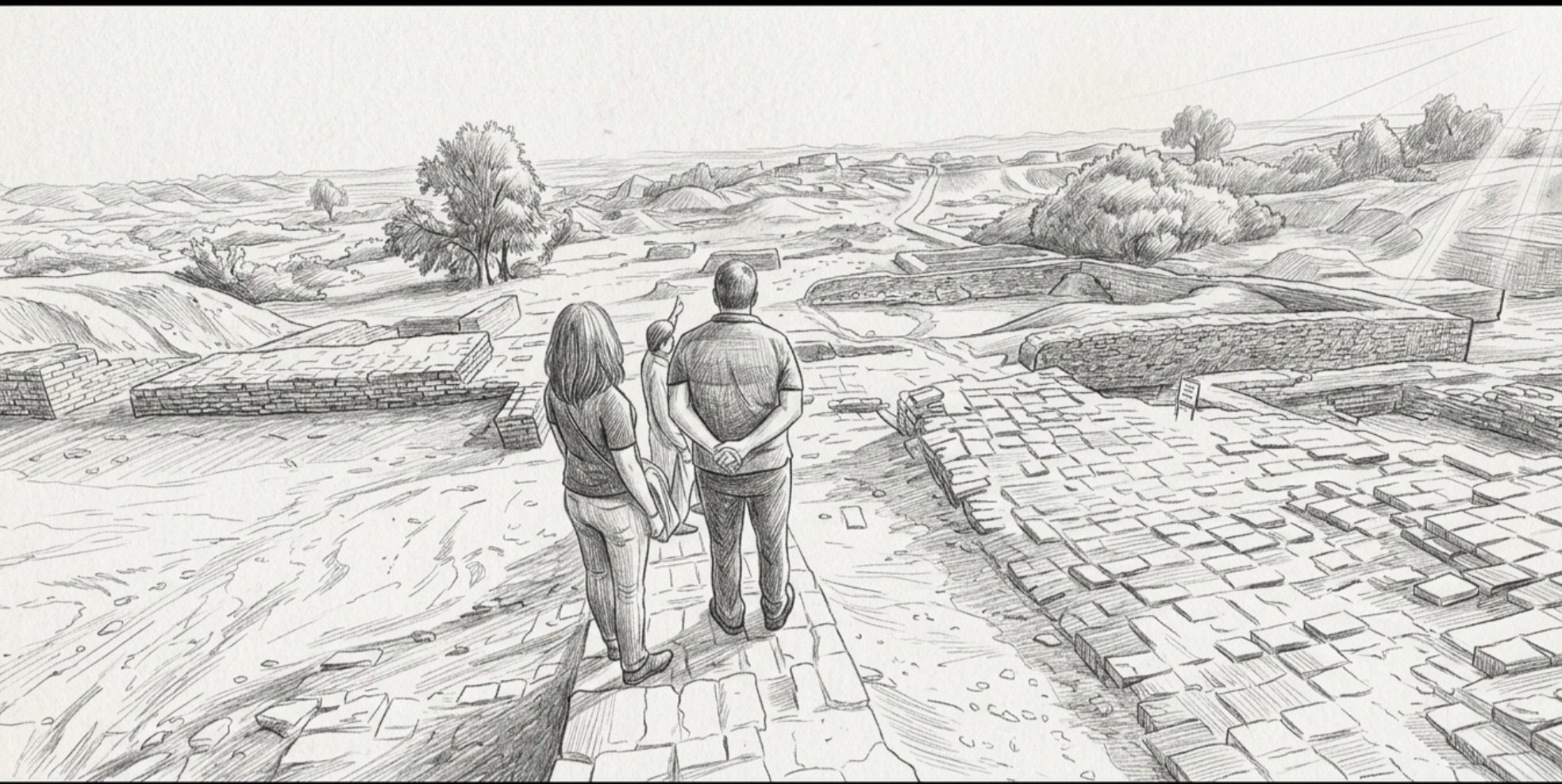
Walking through the residential blocks reveals the daily lives of ancient residents.
Many homes included private wells and bathrooms, which were uncommon in most ancient cities.
Mohenjo-Daro Museum
The nearby museum displays artifacts recovered from excavations.
Highlights include pottery, jewelry, tools, seals, and replicas of famous discoveries.
How to Reach Mohenjo-Daro
By Air
The nearest airport is Mohenjo-Daro Airport.
Flight availability can be limited, so many travelers fly to Sukkur or Karachi before continuing by road.
By Road
Road travel remains the most common option.
Private cars and hired transport from Larkana provide the easiest access.
By Train
Visitors can travel by train to nearby railway stations and continue by road.
Checking schedules before departure is important because services can change.
Entry Fee and Travel Costs
Costs may vary over time, but visitors should budget for:
- Entrance ticket
- Transportation
- Local guide
- Food and refreshments
- Accommodation in Larkana
A day trip from Larkana is generally affordable for domestic travelers.
Budget Traveler
Choose public transport and a day visit.
Comfort Traveler
Hire private transportation and stay overnight in Larkana.
What Many Travel Guides Miss
Most guides focus only on ruins.
The real value of Mohenjo-Daro is understanding how advanced the city was compared to other settlements of the same period.
Several features stand out:
- Standardized brick sizes
- Organized city planning
- Private sanitation systems
- Public infrastructure
- Long-distance trade evidence
These details help visitors appreciate why historians consider the city centuries ahead of its time.
Photography Tips
Visit early morning for softer light and cooler temperatures.
Wide-angle shots work best for capturing the city’s street layout.
The winter season usually offers clearer skies and better visibility.
Essential Travel Tips
- Carry water throughout your visit.
- Wear a hat and sunscreen.
- Use comfortable walking shoes.
- Visit early to avoid heat.
- Hire a guide for historical context.
- Keep camera batteries fully charged.
- Allow at least three to four hours for exploration.
Is Mohenjo-Daro Worth Visiting?
Yes.
Mohenjo-Daro offers far more than ancient ruins. It provides direct evidence of one of the world’s earliest urban civilizations.
Travelers interested in archaeology, history, architecture, or cultural heritage will find the site especially rewarding.
The combination of advanced city planning, historical significance, and UNESCO recognition makes it one of Pakistan’s most important travel destinations.
Frequently Asked Questions
How old is Mohenjo-Daro?
Mohenjo-Daro dates back to approximately 2500 BCE, making it around 4,500 years old.
Why is Mohenjo-Daro famous?
It is famous for its advanced urban planning, drainage systems, and role in the Indus Valley Civilization.
How much time do you need at Mohenjo-Daro?
Most visitors spend three to four hours exploring the ruins and museum.
Can you visit Mohenjo-Daro in one day?
Yes. Many travelers visit as a day trip from Larkana.
What is the best month to visit Mohenjo-Daro?
December and January usually offer the most comfortable weather conditions.