
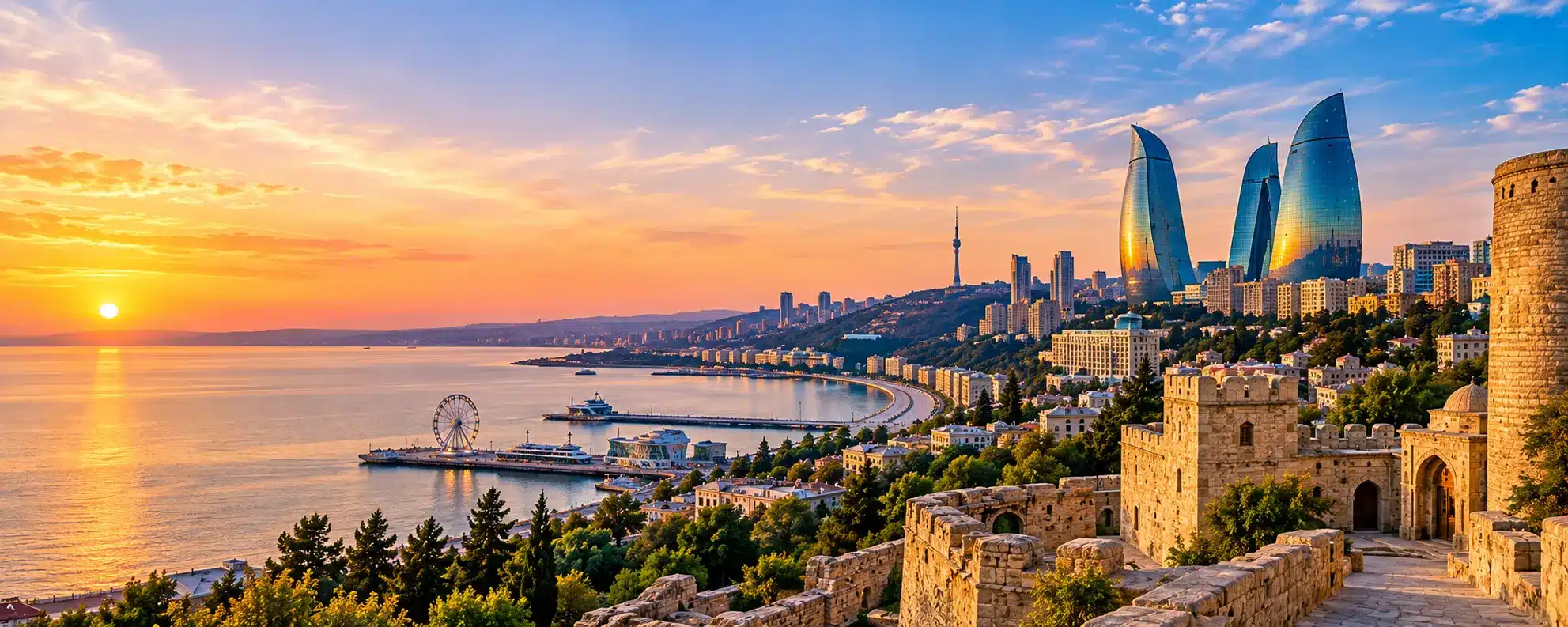
Travel Guide
Azerbaijan
for First-Time Visitors
A complete travel guide to explore Azerbaijan’s history,
mountains, food, beaches and modern cities. Discover
the perfect blend of Caucasus landscapes, Caspian Sea
scenery and Silk Road heritage.
Introduction
Azerbaijan is a strong choice for travelers seeking history, mountains, food, beaches, and modern cities. The country combines Caucasus landscapes with Caspian Sea scenery and Silk Road heritage. Baku works well as a first base because many major attractions are easy to reach from the capital. For a first trip, plan 7–10 days if you want to combine Baku with several regions.
Azerbaijan sits between the Caucasus Mountains and the Caspian Sea. Its geography creates striking contrasts within a relatively compact country. You can visit a modern capital, ancient villages, mountain resorts, vineyards, beaches, and archaeological sites.
Azerbaijan also has several UNESCO World Heritage sites and important cultural landscapes. The country is known for Azerbaijani cuisine, tea culture, carpets, crafts, music, and traditional hospitality.
Why visit Azerbaijan?
Explore Baku’s historic Old City
See ancient rock art in Gobustan
Visit the Silk Road city of Sheki
Hike around Khinalig and the Greater Caucasus
Relax around Gabala and Nohur Lake
Discover copper craftsmanship in Lahij
Explore Nakhchivan’s historic monuments.
Experience Karabakh’s developing tourism destinations.
Taste plov, dolma, kebabs, qutab, and Azerbaijani sweets.
How long should you stay?
Baku and nearby attractions
3–4 days
Baku, Gobustan, Sheki, and Gabala
5–7 days
Baku, Quba, Khinalig, Sheki, Gabala, and Shamakhi
8–10 days
Nakhchivan, Lankaran, Ganja, or permitted Karabakh destinations
10–14 days
15 Best Places to Visit in Azerbaijan
Baku
Baku is the best starting point for most first-time visitors. The city combines a historic center with modern architecture along the Caspian Sea. Visit Icherisheher, the Flame Towers, Baku Boulevard, Highland Park, and the Carpet Museum.
Spend time walking through the Old City instead of visiting only major landmarks. The narrow streets reveal small courtyards, historic buildings, cafés, galleries, and souvenir shops.
Best for: History, architecture, food, nightlife, shopping, and families.
Recommended stay: 2–4 nights.
Sheki
Sheki is one of Azerbaijan’s most rewarding cultural destinations. The city developed along important Silk Road routes and retains its historic character. The Historic Centre of Sheki is a UNESCO World Heritage Site.
Visit the Palace of the Sheki Khans and admire its famous shebeke windows. You can also explore caravanserais, craft workshops, museums, and traditional sweet shops. Try Sheki halva, a local specialty made with layers of pastry, nuts, and syrup.
Best for: Culture, history, architecture, food, and photography.
Recommended stay: 1–2 nights.
Gabala
Gabala is one of Azerbaijan’s most popular mountain destinations. Forests, lakes, waterfalls, and mountain scenery surround the city. Nohur Lake is one of the area’s most relaxing places.
Gabala also offers outdoor activities during different seasons. Winter visitors can enjoy skiing and snowboarding in the Caucasus. Summer visitors can choose hiking, quad biking, paragliding, and other outdoor activities. The nearby Tufandag area is especially popular with families.
Best for: Nature, families, mountains, resorts, and outdoor activities.
Recommended stay: 1–2 nights.
Quba
Quba is an excellent gateway to northern Azerbaijan. The region offers mountain scenery, forests, villages, and cultural diversity. It is also a useful base for visiting Khinalig.
Explore Quba’s historic center before continuing into the mountains. The surrounding villages provide excellent opportunities for hiking and cultural tourism.
Best for: mountains, hiking, villages, culture, and nature.
Recommended stay: 1–2 nights.
Khinalig
Khinalig is one of Azerbaijan’s most remarkable mountain villages. The settlement sits high in the Greater Caucasus Mountains. Its traditional stone houses form a distinctive stepped landscape.
The village has thousands of years of history and a unique local culture. Khinalig is part of the UNESCO-listed Cultural Landscape of Khinalig and Köç Yolu. The surrounding mountains make the area especially attractive for hikers and photographers. Weather can change quickly, so proper clothing matters.
Best for: Hiking, photography, culture, and mountain scenery.
Recommended stay: 1 night or a long day trip.
Lahij
Lahij is a historic mountain village famous for traditional craftsmanship. Its stone houses and cobbled streets create a strong old-world atmosphere. The village has a long history of copper craftsmanship.
Local artisans still produce traditional copper items. Lahij was once known for dozens of different crafts, including blacksmithing and carpet weaving. The village is around three hours from Baku by road. It works particularly well as a day trip.
Best for: Crafts, history, photography, villages, and local food.
Shamakhi
Shamakhi was once one of Azerbaijan’s major political and cultural centers. The region has a long history connected with Shirvan. Visit the Juma Mosque and explore the surrounding countryside.
Shamakhi is also known for vineyards and traditional cuisine. The nearby Shamakhi Astrophysical Observatory offers another reason to visit. The region forms part of the Mountainous Shirvan culinary area.
Best for: History, astronomy, wine, countryside, and culture.
Recommended stay: 1 night.
Gobustan
Gobustan is one of Azerbaijan’s most important archaeological destinations. The region is famous for ancient rock carvings and unusual landscapes. More than 6,000 petroglyphs record human activity across thousands of years.
The area also offers mud volcanoes and semi-desert scenery. Gobustan works well as a day trip from Baku. Combine it with nearby coastal attractions for a fuller day.
Best for: Archaeology, history, geology, photography, and families.
Shusha
Shusha is one of the most important cultural destinations in Karabakh. The city has deep connections with Azerbaijani music, poetry, architecture, and cultural history. Its mountain setting also creates impressive views.
Travel conditions and access rules can change, so check official information before visiting. Foreign visitors can currently visit several liberated territories with the required permits.
Best for: Culture, history, architecture, and mountain scenery.
Nakhchivan
Nakhchivan is an autonomous republic separated from mainland Azerbaijan. It offers a very different travel experience from Baku and the northern regions. Visit the Momine Khatun Mausoleum, Nakhchivan Khan’s Palace, Ordubad, and Lake Batabat.
The region also has numerous mineral springs. Nakhchivan is known for its distinctive cuisine and strong historical identity.
Best for: History, architecture, food, nature, and off-the-beaten-path travel.
Recommended stay: 2–3 nights.
Ganja
Ganja is Azerbaijan’s second-largest city and an important cultural center. The city has strong connections with the poet Nizami Ganjavi. Visit Nizami Ganjavi’s Mausoleum and explore the historic city center.
Ganja also offers parks, traditional architecture, cafés, and local cuisine. Add Goygol Lake if you have extra time.
Best for: Culture, literature, history, food, and day trips.
Recommended stay: 1–2 nights.
Lankaran
Lankaran offers a greener and more subtropical side of Azerbaijan. The city lies near the Caspian coast and the Talysh Mountains. Tea plantations are one of the region’s distinctive attractions.
Visit Lankaran’s historic buildings and explore nearby natural areas. The region also provides access to the Hirkan forests.
Best for: Nature, tea, food, forests, and relaxation.
Recommended stay: 2 nights.
Shahdag
Shahdag is one of Azerbaijan’s leading mountain resorts. It is especially popular during winter. Visitors can enjoy skiing, snowboarding, mountain activities, and resort facilities.
Summer also offers hiking and other outdoor experiences. Shahdag works well for travelers who want a mountain resort without leaving Azerbaijan.
Best for: Skiing, families, resorts, mountains, and adventure.
Goygol
Goygol is famous for its beautiful mountain lake.
The surrounding landscape includes forests, mountains, and peaceful countryside.
It is an excellent destination for nature photography.
Combine Goygol with a visit to Ganja.
Spring and autumn are particularly attractive for landscape photography.
Best for: Nature, photography, hiking, and peaceful escapes.
Absheron Peninsula
The Absheron Peninsula offers attractions close to Baku. Visit Yanar Dag, Ateshgah Fire Temple, and coastal areas around the peninsula. The region helps explain Azerbaijan’s historic connection with natural gas and fire. A half-day or full-day excursion works well from Baku.
Best for: History, fire temples, geology, and short excursions.
Baku Travel Guide
Baku deserves at least two full days on a first visit. Start your morning in Icherisheher. Walk through the historic streets and visit the Palace of the Shirvanshahs.
Continue toward the Maiden Tower and surrounding streets. Later, walk along Baku Boulevard beside the Caspian Sea. Visit Highland Park around sunset for one of the city’s best viewpoints.
Best Things To Do In Baku
Explore Icherisheher
Visit the Maiden Tower.
See the Palace of the Shirvanshahs.
Explore Local Markets
Walk along Baku Boulevard
Visit the Carpet Museum
See the Flame Towers
Visit Highland Park
Try Azerbaijani cuisine
Take a day trip to Gobustan.
Where to stay in Baku
Stay in Icherisheher for historic surroundings. Choose the city center for restaurants, shopping, and nightlife. Choose the Boulevard area for Caspian Sea views.
Sheki Travel Guide
Sheki is best experienced at a slower pace. Start with the Historic Centre and Sheki Khan’s Palace. Then visit the caravanserais and local craft workshops.
Take time to drink Azerbaijani tea with traditional sweets. The city’s Silk Road history remains visible through its architecture and crafts.
Quba Travel Guide
Quba works best as part of a northern Azerbaijan itinerary. Spend time exploring the city before heading toward the mountains. If you enjoy hiking, continue toward mountain villages.
Khinalig should be planned separately because the mountain journey requires more time. Local guides can make mountain routes easier and safer. Marked routes are preferable when hiking in unfamiliar mountain areas.
Nakhchivan Travel Guide
One-day Sheki itinerary
Morning: Sheki Khan’s Palace and fortress.
Lunch: Traditional Sheki dishes.
Afternoon: Caravanserais and craft workshops.
Evening: Tea, local sweets, and a relaxed city walk.
Stay overnight if possible. A second morning allows time for nearby villages and nature.
Gabala Travel Guide
Gabala suits travelers who want nature without sacrificing comfortable accommodation. Begin with Nohur Lake. Then continue toward Tufandag and nearby mountain attractions. Families can combine sightseeing with resort activities. Summer offers hiking and outdoor adventures.
Winter transforms the region into a snow destination. If visiting between late May and late June, consider the lavender fields. The fields are usually at their most attractive during this period.
Lahij Travel Guide
Lahij is ideal for travelers interested in traditional Azerbaijani culture. Walk slowly through the stone streets. Visit copper workshops and watch artisans at work.
Look for handmade souvenirs instead of mass-produced products. Try local sweets and traditional dishes. The village also provides access to mountain hiking routes. Summer is especially pleasant because of the cooler mountain air.
Shamakhi Travel Guide
Shamakhi is an excellent stop between Baku and western Azerbaijan. The city has centuries of history and important religious architecture. Visit the Juma Mosque and explore the surrounding countryside.
Wine lovers can add local wineries to their itinerary. Astronomy enthusiasts can also consider the Shamakhi Astrophysical Observatory. The surrounding Mountainous Shirvan region has its own culinary traditions. A day trip works well for most visitors.
Karabakh Travel Guide
Karabakh is becoming an important part of Azerbaijan’s developing tourism map. The region includes destinations such as Shusha, Lachin, Aghdam, Fuzuli, Khojaly, and Khankendi. Foreign visitors can currently visit these destinations with the required permits.
Travelers should check official requirements before planning their route. Access rules can change because reconstruction and infrastructure work continue. Do not leave approved routes or enter restricted areas.
Follow local instructions regarding road access and safety. For foreign visitors traveling by private vehicle, permission is available through the Yolumuz Qarabağa portal.
Best reasons to visit Karabakh
Explore Shusha’s cultural heritage. See mountain landscapes. Discover newly developing tourism areas.
Learn about regional history. Experience Azerbaijan’s reconstruction process. Karabakh requires more planning than established destinations such as Baku or Sheki.
Nakhchivan Travel Guide
Nakhchivan deserves more than a quick stop. Start in Nakhchivan City and visit the Momine Khatun Mausoleum. Then explore local museums and historic buildings.
Take a trip toward Ordubad for traditional architecture and quieter streets. Lake Batabat provides a scenic countryside escape.
The Ashabi-Kahf Cave is another notable cultural site. Nakhchivan also has opportunities for birdwatching and mountain activities.
Daily flights connect Nakhchivan with Baku, according to Azerbaijan’s official tourism information.
Best Time to Visit Azerbaijan
Azerbaijan can be visited throughout the year. However, the best season depends on your travel plans.
Spring: April to June
Spring is excellent for sightseeing and outdoor activities. Temperatures are generally comfortable for city walks. Mountain landscapes become greener during this period. Late May and June are especially attractive for Gabala’s lavender fields.
Best for: Baku, Sheki, Gabala, Quba, hiking, and nature.
Summer: July to August
Summer is ideal for mountain destinations. Baku can become hot during the day. Plan city sightseeing for mornings and evenings. Mountain regions usually offer cooler conditions.
Best for: Mountains, lakes, hiking, and resorts.
Autumn: September to October
Autumn is one of the strongest seasons for an Azerbaijan road trip. Temperatures become more comfortable. Mountain landscapes develop beautiful autumn colors. Food experiences also fit well into an autumn itinerary.
Best for: Road trips, photography, food, hiking, and cultural travel.
Winter: November to March
Winter is the best period for snow activities. Shahdag and Tufandag become major winter destinations. Baku remains suitable for museums, restaurants, shopping, and cultural sightseeing.
Best for: Skiing, snow, spas, museums, and winter photography.
Azerbaijan Travel Cost
Azerbaijan can offer good value compared with many European destinations. The official tourism service describes Azerbaijan as a cost-effective destination. Prices vary considerably between Baku, mountain resorts, and smaller towns.
The local currency is the Azerbaijani manat (AZN). Cards are widely accepted in Baku and larger cities. Cash remains useful in smaller towns and rural areas.
Budget travelers
Choose guesthouses and simple hotels. Use trains, buses, and shared transport when practical. Eat at local restaurants rather than tourist-focused venues. Stay outside the most expensive central areas of Baku.
Mid-range travelers
Choose comfortable three- or four-star hotels. Combine public transport with occasional taxis. Add guided day trips for destinations such as Gobustan and Khinalig.
Luxury travelers
Choose five-star hotels in Baku or mountain resorts. Use private transfers for longer regional journeys. Add private guides, premium restaurants, spa experiences, and curated cultural tours.
Azerbaijan Visa and Entry Information
Visa rules depend on nationality.
Many travelers can apply for an electronic visa through the official ASAN Visa system. The standard e-visa application should be submitted at least three working days before arrival.
The official system states that an e-visa permits a single entry. The permitted stay is up to 30 days within its validity period. Always check the official visa portal before booking your trip.
Getting Around Azerbaijan
Baku has the country’s only metro system. The metro is useful for moving around central areas.
Buses provide affordable transport within Baku and between many destinations.
Trains connect Baku with several major cities. Taxis are useful for shorter journeys and day trips.
Private drivers become more practical when visiting mountain villages. A rental car can provide greater flexibility for a longer road trip.
However, mountain roads require extra care during poor weather. Official tourism information also lists buses and trains as convenient options for traveling around Azerbaijan.
What to Eat in Azerbaijan
Azerbaijani food should be part of your travel itinerary. Try plov, one of the country’s best-known rice dishes.
Order dolma for a classic stuffed vegetable or grape-leaf dish.
Try qutab, a thin filled flatbread cooked on a griddle. Kebab is widely available throughout the country.
Drink Azerbaijani black tea with traditional sweets.
In Sheki, try the famous local halva.
In Quba and northern regions, look for regional dishes and homemade products. Food changes between regions, which makes a road trip especially rewarding.
Azerbaijan Travel Tips for First-Time Visitors
1. Start with Baku
Baku gives you the easiest introduction to Azerbaijan. It also provides convenient access to nearby attractions.
2. Add at least one mountain region
Sheki, Quba, Gabala, and Shahdag offer very different scenery.
3. Carry some cash
Cards work widely in major cities. Smaller businesses may prefer cash.
4. Learn a few Azerbaijani words
Simple greetings can make local interactions warmer. English and Russian are more commonly understood in major tourist areas.
5. Check mountain weather
Mountain conditions can change quickly. Pack layers even during warmer months.
6. Book popular resorts early
Winter weekends can become busy around Shahdag and Tufandag.
7. Check current access rules
This matters especially when visiting Karabakh and border-adjacent mountain areas.
8. Respect local traditions
Azerbaijan is a secular country with diverse religious and cultural traditions. Visitors should dress appropriately when entering religious sites
Best Azerbaijan Itineraries
Azerbaijan can offer good value compared with many European destinations. The official tourism service describes Azerbaijan as a cost-effective destination. Prices vary considerably between Baku, mountain resorts, and smaller towns.
The local currency is the Azerbaijani manat (AZN). Cards are widely accepted in Baku and larger cities. Cash remains useful in smaller towns and rural areas.
5-Day Azerbaijan Itinerary
- Day 1: Baku Old City and Boulevard.
- Day 2: Baku and Absheron Peninsula.
- Day 3: Gobustan and mud volcanoes.
- Day 4: Sheki.
- Day 5: Sheki and return to Baku.
7-Day Azerbaijan Itinerary
- Day 1-2: Baku.
- Day 3: Gobustan and Absheron.
- Day 4: Shamakhi and Lahij.
- Day 5: Sheki.
- Day 6: Gabala.
- Day 7: Return to Baku.
10-Day Azerbaijan Itinerary
- Day 1-2: Baku.
- Day 3: Gobustan.
- Day 4: Shamakhi and Lahij.
- Day 5-6: Sheki.
- Day 7: Gabala.
- Day 8: Quba.
- Day 9: Khinalig.
- Day 10: Return to Baku.
Frequently Asked Questions
Yes. Azerbaijan offers cities, mountains, history, food, and nature within one trip. Baku also provides a convenient starting point for regional excursions.
Seven to ten days works well for a first visit. Two weeks allows a slower trip with more regional destinations.
Baku is the easiest starting point. Sheki is excellent for history and culture. Gabala is better for mountains and family activities. Quba is ideal for northern mountain trips.
Azerbaijan can be relatively affordable compared with many European destinations. Your biggest costs will usually be accommodation, transport, and guided tours.
May, June, September, and October are excellent choices for many travelers. Winter is better if skiing is your main goal.
Azerbaijan’s major tourist destinations are generally straightforward for visitors. Follow local instructions and check current travel restrictions. This is particularly important around restricted and border-adjacent areas.
Foreign visitors can visit several liberated territories with the required permission. Current arrangements include Shusha, Lachin, Aghdam, Fuzuli, Khojaly, and Khankendi.
The currency is the Azerbaijani manat, written as AZN.
That depends on your nationality. Eligible travelers can apply through the official ASAN Visa system.
Start with plov, dolma, qutab, kebab, Azerbaijani tea, and local sweets. Try regional specialties when traveling outside Baku.
Yes. Baku, Gabala, Shahdag, and several nature destinations work well for families. Gabala offers particularly strong choices for outdoor family activities.
Yes. A road trip makes it easier to combine Baku with mountain villages and regional cities. A private car is especially useful for remote destinations.
Azerbaijan Travel at a Glance
Best first destination
Baku
Best cultural destination
Sheki
Best mountain destination
Quba and Khinalig
Best family destination
Gabala
Best winter destination
Shahdag
Best historic village
Lahij
Best archaeological site
Gobustan
Best unusual destination
Nakhchivan
Best regional road trip
Baku → Shamakhi → Lahij → Gabala → Sheki → Quba
Best overall trip length
7–10 days
Currency
Azerbaijani manat (AZN)
Best general seasons
Spring and autumn
Azerbaijan rewards travelers who go beyond Baku. The strongest itinerary combines the capital with at least one historic city and one mountain region. That combination reveals the country’s architecture, landscapes, food, and cultural diversity in one journey.