Travel Guide
Italy
Where to Go, What to See, and How to Plan Your Trip
Introduction
Italy is best for travelers who want history, beautiful cities, great food, beaches, mountains, and art in one trip. The easiest way to plan Italy is by region. Start with Rome for ancient history, Florence for Renaissance art, Venice for canals, and the Amalfi Coast for sea views.
Your route can then include Tuscany, Milan, Lake Como, Sicily, Sardinia, or Puglia, depending on your time.
Best Places to Visit in Italy
Rome
Rome is the best starting point for a first trip to Italy. The city combines ancient ruins, famous churches, museums, lively squares, and traditional Italian food.
Visit:
– Colosseum
– Roman Forum
– Pantheon
– Trevi Fountain
– Spanish Steps
– Vatican City
– St. Peter’s Basilica
– Vatican Museums
– Piazza Navona
– Trastevere
Rome deserves at least three days because its main sights are spread across different neighborhoods. Book popular attractions early, especially the Colosseum and Vatican Museums.
Florence
Florence is ideal for travelers interested in Renaissance art, architecture, and Italian history. The historic center is compact, so many attractions are easy to reach on foot.
Visit:
– Florence Cathedral
– Brunelleschi’s Dome
– Uffizi Gallery
– Ponte Vecchio
– Palazzo Vecchio
– Piazza della Signoria
– Accademia Gallery
– Boboli Gardens
Florence also works well as a base for day trips around Tuscany. From Florence, you can visit Siena, Pisa, San Gimignano, and nearby vineyards.
Venice
Venice offers a very different experience from Italy’s other major cities. Instead of roads and cars, the historic center is built around canals, bridges, and narrow walking streets.
Visit:
– St. Mark’s Square
– St. Mark’s Basilica
– Doge’s Palace
– Rialto Bridge
– Grand Canal
– Bridge of Sighs
– Burano
– Murano
Stay overnight if possible. Venice becomes quieter after many day-trippers leave, giving you more time to enjoy its streets.
Milan
Milan is Italy’s center for fashion, design, business, and modern culture. It also has important historic landmarks.
Visit:
– Milan Cathedral
– Galleria Vittorio Emanuele II
– Sforza Castle
– Brera
– Navigli
– Santa Maria delle Grazie
The Last Supper is one of Milan’s most popular attractions. Reservations are essential because visitor numbers are limited. Milan is also a useful gateway to Lake Como and other northern Italian destinations.
Amalfi Coast
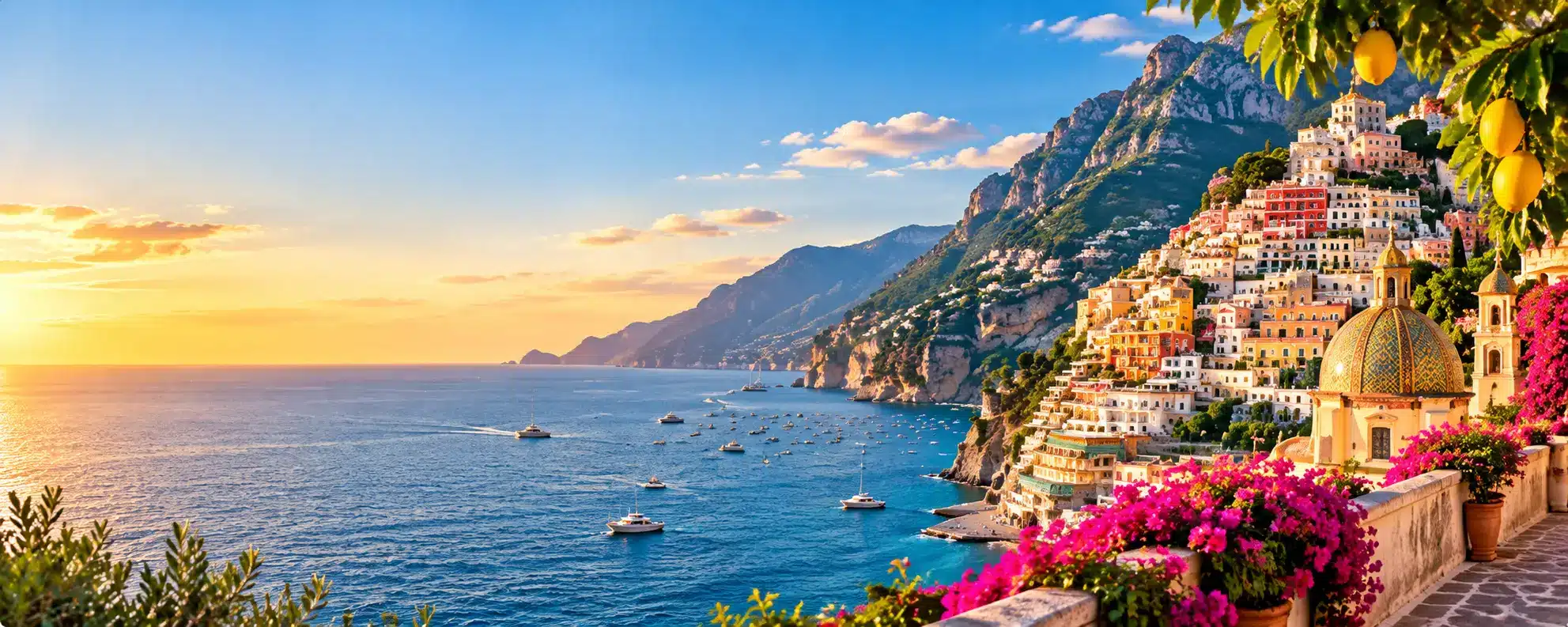
The Amalfi Coast is famous for dramatic cliffs, colorful villages, and views over the Mediterranean.
Visit:
– Amalfi
– Positano
– Ravello
– Sorrento
– Praiano
– Atrani
The roads are narrow and can become busy during summer. Public buses, ferries, and organized transfers can be easier than driving. For a quieter experience, consider visiting in spring or early autumn.
Tuscany
Tuscany is a strong choice for travelers who want countryside, historic towns, vineyards, and traditional food. Florence is the main cultural center, while smaller towns offer a slower experience.
Visit:
– Siena
– San Gimignano
– Lucca
– Pisa
– Montepulciano
– Pienza
– Val d’Orcia
Renting a car makes rural Tuscany easier to explore. However, a car is not necessary if you stay in Florence and use trains or tours.
Lake Como
– Como
– Bellagio
– Varenna
– Menaggio
– Villa Carlotta
– Villa del Balbianello- Colosseum
– Roman Forum
– Pantheon
– Trevi Fountain
– Spanish Steps
– Vatican City
– St. Peter’s Basilica
– Vatican Museums
– Piazza Navona
– Trastevere
Ferries connect several towns around the lake. This makes it possible to explore without renting a car.
Puglia
Puglia is a good choice for travelers looking for beaches, small towns, local food, and a less crowded atmosphere.
Visit:
– Bari
– Alberobello
– Polignano a Mare
– Ostuni
– Lecce
– Monopoli
– Matera
Alberobello is known for its traditional trulli houses. Lecce is famous for its detailed Baroque architecture.
Sicily
Sicily offers beaches, ancient ruins, volcanoes, historic cities, and distinctive regional food.
Visit:
– Palermo
– Catania
– Taormina
– Syracuse
– Agrigento
– Mount Etna
– Cefalù
Sicily is large, so avoid trying to see the entire island during a short trip. Choose one area and explore it properly instead.
How Many Days Do You Need in Italy?
A first trip can work well with 7 to 14 days.
For Seven Days
Focus on three main destinations.
Example: Rome → Florence → Venice
For Ten Days
You can add the Amalfi Coast or Tuscany.
For Two Weeks
you have enough time for a wider route.
Example:
Rome → Florence → Tuscany → Venice → Milan → Lake Como
Avoid adding too many cities. Changing hotels every night can make the trip feel rushed, even when the route looks efficient.
Best Italy Itineraries
7-Day Italy Itinerary
- Day 1-3: Rome, explore ancient Rome, Vatican City, and the historic center.
- Day 4-5: Florence, visit the main museums and walk through the historic center.
- Day 6–7: Venice, explore St. Mark’s Square, the Grand Canal, and nearby islands.
10-Day Italy Itinerary
- Day 1-3: Rome
- Day 4-5: Florence
- Day 6-7: Tuscany
- Days 8–10: Venice
This route gives you a good mix of history, art, countryside, and canals.
14-Day Italy Itinerary
- Day 1-3: Rome
- Day 4-5: Florence
- Day 6-7: Tuscany
- Day 8-9:Venice
- Days 10–11: Milan
- Day 12-14: Lake Como
This route works well for first-time visitors who want both famous cities and scenic areas.
How to Travel Around Italy
Trains are usually the easiest option between major Italian cities. High-speed trains connect cities such as Rome, Florence, Milan, Naples, and Venice. Regional trains are useful for shorter journeys.
Cars become more useful in rural areas such as Tuscany, Puglia, and parts of Sicily. Avoid driving inside historic city centers unless you know the local traffic restrictions. Many Italian cities have restricted traffic zones called ZTL areas.
Entering one without permission can result in a fine.
Best Time to Visit Italy
The best time depends on the type of trip you want.
Spring
Great for cities, countryside, and comfortable sightseeing.
Summer
Best for beaches, but popular destinations become crowded and expensive.
Autumn
Excellent for food, wine, countryside, and city trips.
Winter
Good for museums, Christmas markets, skiing, and quieter cities.
Good for museums, Christmas markets, skiing, and quieter cities. For a first trip, April to June and September to October often provide a good balance.
Italian Food to Try
Food changes from one Italian region to another. That regional difference is one of the best reasons to travel beyond the major cities.
Try in Rome
– Cacio e pepe
– Carbonara
– Amatriciana
– Supplì
Try in Florence and Tuscany
– Bistecca alla Fiorentina
– Ribollita
– Pappa al pomodoro
– Tuscan pecorino
Try in Naples:
– Neapolitan pizza
– Pizza fritta
– Sfogliatella
Try in Sicily
– Arancini
– Pasta alla Norma
– Cannoli
– Granita
Try in Bologna
– Tagliatelle al ragù
– Tortellini
– Mortadella
Do not judge Italian food only by famous dishes. Local specialties often change dramatically between neighboring regions.
Italy Travel Costs
Italy can suit different budgets, but famous destinations can become expensive during peak season. Your biggest costs are usually accommodation, transport, food, and attraction tickets.
Budget travelers
Budget travelers can save by using trains, local restaurants, supermarkets, and smaller hotels.
Mid-range travelers
Mid-range travelers can choose comfortable hotels, paid attractions, and occasional taxis.
Luxury travelers
Luxury travelers can choose historic hotels, private transfers, fine dining, and private tours.
Prices also vary greatly between cities. Venice, Milan, Lake Como, and the Amalfi Coast can cost more than many smaller Italian towns.
Practical Tips for Italy
Book major attractions before your trip.
Carry comfortable shoes because many historic centers have uneven streets and stone pavements.
Keep small amounts of cash for small purchases, although cards are widely accepted.
Learn a few Italian phrases because they can make everyday interactions easier.
Keep your belongings close in crowded tourist areas.
Check train platforms carefully because platforms can change before departure.
Allow extra travel time when visiting islands or mountain areas.
Most importantly, leave some free time in your itinerary.
Italy is not only about checking famous landmarks from a list. Some of the best moments happen while walking through a small street, stopping at a local café, or discovering a quiet town.
Italy Travel: Where Should You Go?
Choose Rome if you love ancient history and major landmarks.
Choose Florence if you love art and Renaissance architecture.
Choose Venice if you want canals, historic buildings, and a unique city atmosphere.
Choose Milan for fashion, shopping, design, and northern Italy.
Choose Amalfi Coast for dramatic coastal scenery.
Choose Tuscany for countryside, villages, wine, and slow travel.
Choose Lake Como for mountains, lakes, gardens, and elegant villages.
Choose Puglia for beaches, traditional towns, and southern Italian culture.
Choose Sicily for beaches, ancient sites, volcanoes, and distinctive food.
Is Italy Good for a First Trip to Europe?
Yes. Italy is one of the easiest European countries to build a first multi-city trip around. Its major cities have strong transport connections, while each region offers a different travel experience.
You can combine ancient history, art, beaches, mountains, food, shopping, and countryside within one country. That variety makes Italy especially useful for travelers with limited vacation time.
Frequently Asked Questions
Rome is the strongest starting point for most first-time visitors. It combines ancient history, museums, architecture, food, and Vatican City.
Seven days is enough for a focused first trip. Ten to fourteen days gives you more time for several regions.
Italy can be affordable or expensive depending on the destination and season. Major tourist cities usually cost more than smaller towns.
Use trains between major cities. Choose a car for rural areas where public transport is less convenient.
May, June, September, and October are strong choices for many travelers. The ideal month depends on whether you want cities, beaches, skiing, or countryside.
For a classic first trip, choose Rome, Florence, and Venice. Add another destination only if your schedule allows enough time to enjoy it.
Avoid rushing through too many cities. Also avoid driving into restricted historic-center areas without checking local ZTL rules. A slower itinerary usually gives you a better experience than trying to see everything.